14 Schedule-I mammals in Karjat's study area
The project's own EC lists leopard, sloth bear, Indian wolf, four-horned antelope and pangolin among 14 Schedule-I mammals, and orders a human–animal conflict plan.
Every number on this site comes from a document I can point to:
Spotted a mistake, or have a document I should see? Write to daredavil239804@gmail.com with the page, the claim and, if you can, a source. I reply within 7 days and note every fix on the page.
Story
The trees, the species, the clearances, the villages and the case for the projects, in 10 short chapters. Every number links to its document. Pick a chapter, or start at the top. New to pumped storage? See how it works.
Chapter 1
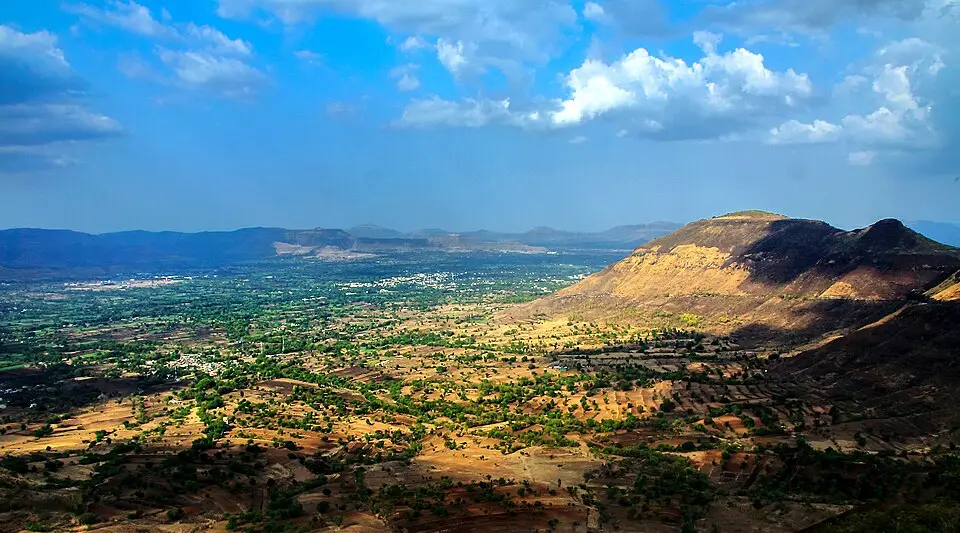
Above the village of Potal in Karjat taluka, the Sahyadri rises in a wall of forest towards the Saidongar plateau. On the forest committee's paper it is 233ⓘ hectares of forest land. On the ground it is a slope of trees, scrub and grass that turns green with the first rain, and the upper edge of a valley that six villages depend on.
Torrent Power wants to put a 3,000ⓘ MW pumped storage project here: two reservoirs, one on the plateau and one on the Pej river below, joined by tunnels. Water is pumped up when power is cheap and let down through turbines when it is dear. The project needs 377ⓘ hectares in all.
Nobody outside the Forest Department knows exactly. Three official numbers exist, and they do not agree.
FAC minutes, 2 Dec 2025 (Stage-I recommended)
Torrent's draft EIA (Aug 2025)
FPJ (citing TOI)
| Source | Trees |
|---|---|
| FAC minutes, 2 Dec 2025 (Stage-I recommended) | 48,557 |
| Torrent's draft EIA (Aug 2025) | 48,000 |
| FPJ (citing TOI) | 32,490 |
No public document explains why the permission covers so many fewer trees than the committee counted. A phased approval is one possible reason; I have not been able to confirm it.
Activists say even the highest figure is too low. Adv. Kailash More of the Karjat Taluka Paryavaran Bachao Samiti told ThePrint that the number actually being cut is several times what is on paper. Alleged No survey has tested that claim, and none is public.
I show these numbers side by side, and do not average them.
The same committee minutes record that 197.77ⓘ of the 233ⓘ hectares lie inside the proposed Rajmachi Conservation Reserve, and inside the Western Ghats ESA in the draft of July 2024. Documented Neither has been notified. The committee recommended Stage-I clearance anyway, and told the developer to seek approval again if the reserve is ever notified. The ministry granted Stage-I on 31 December 2025, and the EC followed on 12 January 2026.
The forest that is lost is to be "compensated" with 252.76ⓘ hectares at Kemase and Dhankal in Patan taluka of Satara, after the first site fell through. That land is already forest-like, and it sits in the buffer of Sahyadri Tiger Reserve. Documented Compensatory afforestation there plants trees among trees, a district away.
Felling began around Dussehra. On 26 October, at a press conference in Mumbai with actor Sayaji Shinde, Adv. More alleged that hundreds of trees were coming down every day. Alleged Aaditya Thackeray visited Saidongar and called it a "massacre of nature". Reported Chief Minister Devendra Fadnavis said the project had completed all approvals and that local concerns would be considered. Official claim
On 27 October the Forest Department said felling had stopped. Reported It has not said how many trees were already cut, or whether the halt is formal. Prime Minister Narendra Modi is scheduled to lay the foundation stone on 3 November.
Karjat is the project where trees are falling first, not the only one where they will fall. The committee papers for Tata Power's Shirawta project record 64,729ⓘ trees, on forest with a canopy density of 0.7ⓘ, which the forest survey classes as very dense. Documented Adani's Malshej Ghat project at Bhorande counts about 35,000ⓘ trees, Torrent's second project at Maval 9,554ⓘ, and Tata's Bhivpuri 6,834ⓘ.
Together, the projects that have published a tree count add up to 1,64,674 trees on record. Most projects in the pipeline have not published one at all.
The forest committee that cleared Karjat recorded 48,557 treesDocumented“Also, the proposal involves felling of 48557 number of trees.”FAC minutes, 2 Dec 2025 (Saidongar-1 Stage-I), page177 · 2 December 2025 to be felled on 233 haDocumented“…te Change to review the project’s environmental implications. The organisation has raised concerns over the proposed diversion of 233 hectares of forest land, warning of potential impacts on the Saidongar area’s natural resources, wildlife and local communities.…”FPJ (citing TOI): felling permission of 14 Oct 2026 · 25 October 2026; Torrent's own draft EIA said 'about 48,000Documented“clearing of 48,000 nos. of trees. (Trees proposed for plantation on Muck disposal area also”Saidongar-1 draft EIA executive summary (MPCB), page21 · August 2025'. The felling permission reported in Oct 2026 is for 32,490Documented“…Pawar Oppose Cutting Of 32,490 Trees For Karjat Power Project A forest order dated October 14, 2026, reportedly permits felling 32,490 trees in Karjat forests for Torrent Power’s proposed 3,000 MW Saidongar-I project. Commenting on the opposition criticism, state…”FPJ (citing TOI): felling permission of 14 Oct 2026 · 25 October 2026.
Documented Source: FAC minutes, 2 Dec 2025 (Saidongar-1 Stage-I) · FPJ (citing TOI): felling permission of 14 Oct 2026 · Saidongar-1 draft EIA executive summary (MPCB)
Chapter 2
A tree count is the easiest thing to measure and the least of what is lost. The Sahyadri is not a stand of trees. It is a living system of forest, plateau, river and grove, and these projects cut into all four.
Torrent says the Karjat site is 16ⓘ km from Bhimashankar Wildlife Sanctuary and outside its eco-sensitive zone. Official claim On a map of legal boundaries, that is true. On a map of where animals move, it is not the point.
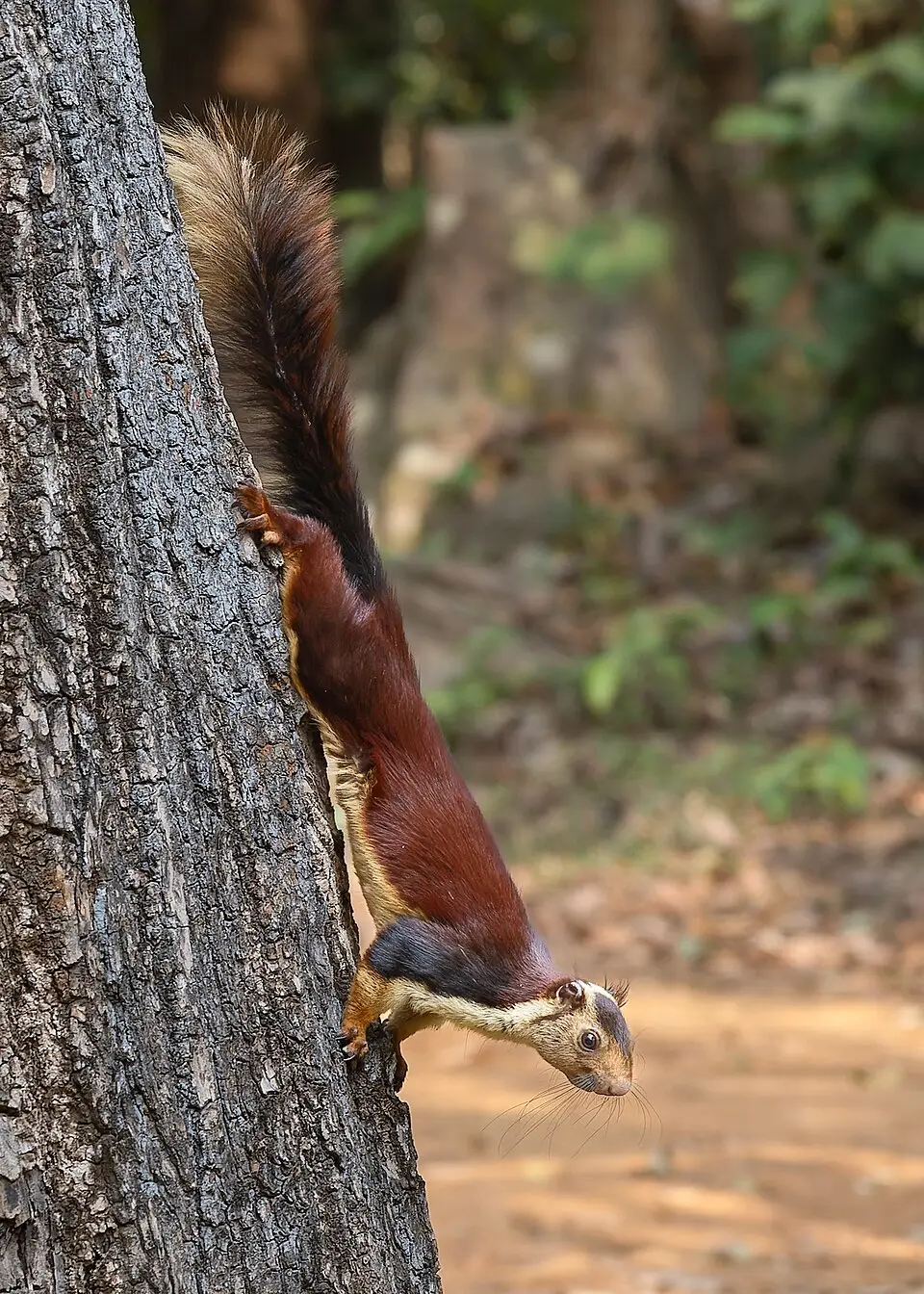
Karjat lies on the forest belt that links Bhimashankar to Malshej Ghat and on to the rest of the northern Sahyadri. Reported Leopard, sambar, gaur, langur and the Shekru, the Indian giant squirrel that is Maharashtra's state animal, use this belt. The Shekru lives in the canopy and travels from tree to tree; a reservoir or a cleared transmission line is a wall to it.
The project's own EC lists 14ⓘ Schedule-I mammals in its study area, including leopard, sloth bear, Indian wolf, four-horned antelope and pangolin, and orders a plan for human–animal conflict. Documented Schedule-I is the highest protection Indian wildlife law gives. A project that needs a conflict plan for its neighbours is not far from wildlife.
Further north, THDC's Malshej project is about 3ⓘ km from Kalsubai-Harishchandragad Wildlife Sanctuary, and its upper reservoir at Khubi sits on the corridor between Harishchandragad and Bhimashankar. Reported To the south, Adani's Nivakane project is about 150ⓘ metres from the buffer of Sahyadri Tiger Reserve. Documented
Sanctuary or national park boundaryEco-sensitive zone (dashed: proposed) Pumped storage project
| Project | Nearest protected area | km |
|---|---|---|
| Ghatghar PSP Stage II | Kalsubai-Harishchandragad WLS | 0 |
| Koyna–Nivakane PSP | Sahyadri Tiger Reserve (buffer zone) | 0.2 |
| THDC Malshej Ghat PSP | Kalsubai-Harishchandragad WLS | 3 |
| Humbarli Birmani PSP | Koyna WLS (Sahyadri Tiger Reserve core) | 8.8 |
| Malshej Ghat Bhorande PSP | Bhimashankar Wildlife Sanctuary | 10.8 |
| Saidongar-2 PSP, Maval | Bhimashankar Wildlife Sanctuary | 14.5 |
| Saidongar-1 PSP, Karjat | Bhimashankar Wildlife Sanctuary | 15.5 |
| Ambegaon PSP | Bhimashankar Wildlife Sanctuary | 16 |
| Shirawta PSP | Bhimashankar Wildlife Sanctuary | 19.7 |
Upper reservoirs need flat ground at the top of a cliff. In the Sahyadri, that means the lateritic plateaus, the sada. For most of the year they look bare. In the monsoon they flower.
The Naneghat plateau, next to Adoshi where Adani plans Bhorande's upper reservoir, holds 45ⓘ plant taxa found only in India. Adoshi and Ajnawale hold six threatened endemics, including the quillwort Isoetes dixitei. Reported On the Kas plateau, about 80ⓘ% of the region's significant plant species grow only on the plateau top and its cliffs. Documented
Because plateaus are often classed as "non-forest", their loss does not show up in the forest figures in Chapter 3.
Maharashtra has thousands of devrai, groves protected by villages for their deity. One study counts about 2,800ⓘ. Reported Many hold the oldest trees left in their valley. The Adrai devrai near Khubi shelters Ceropegia anantii, a plant listed as Critically Endangered, and three other Ceropegia species grow about 200ⓘ metres from Adoshi. Reported No clearance paper we have read maps the devrai inside a project area.
The Kalu, below Malshej, is one of the last west-flowing rivers in the region without a dam. About half its watershed is dense forest, and it sustains the Katkari, a Particularly Vulnerable Tribal Group. The Supreme Court has stayed a dam on it. Reported Bhorande would lift water from the Kalu to a reservoir near the Kukadi basin on the other side of the crest.
Karjat, Bhivpuri, Shirawta and Warasgaon are open-loop designs: one of their reservoirs sits on a river, and the river's fish, flow and floods become part of the machine. Documented
Citizen scientists in Murbad taluka alone have logged more than 5,500ⓘ observations of over 1,600ⓘ species, including the rusty-spotted cat, striped hyena and Malabar trogon. Reported None of them is in an EIA.
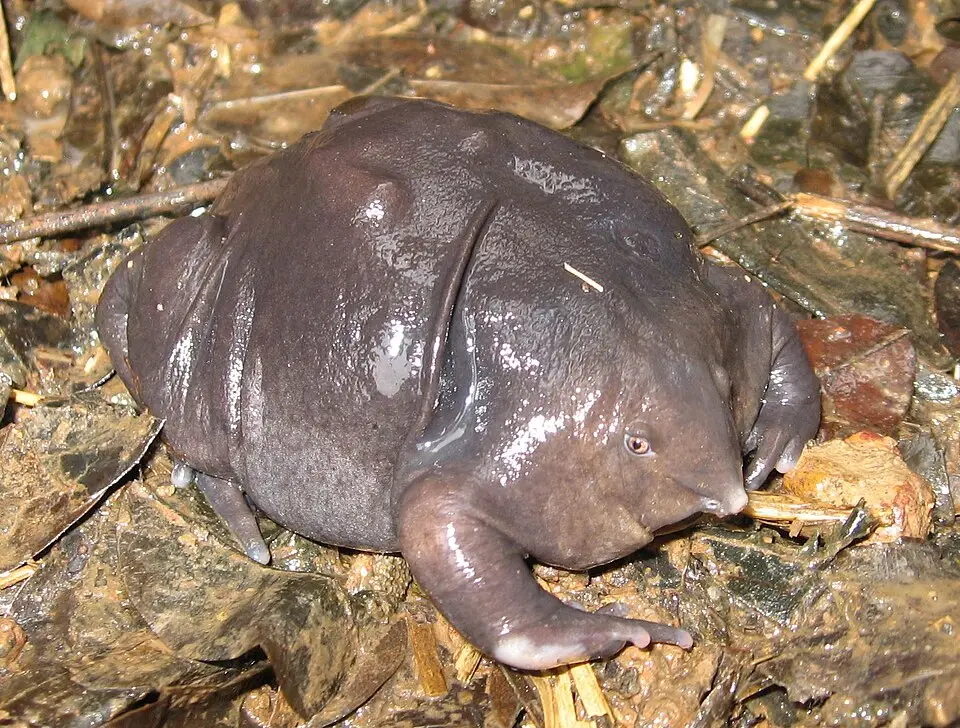
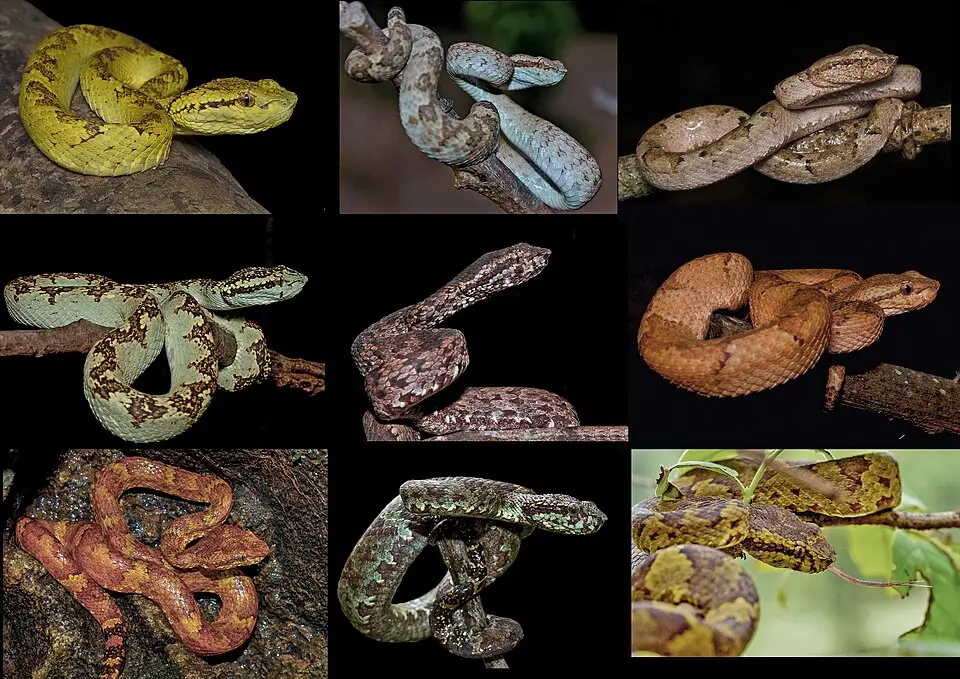
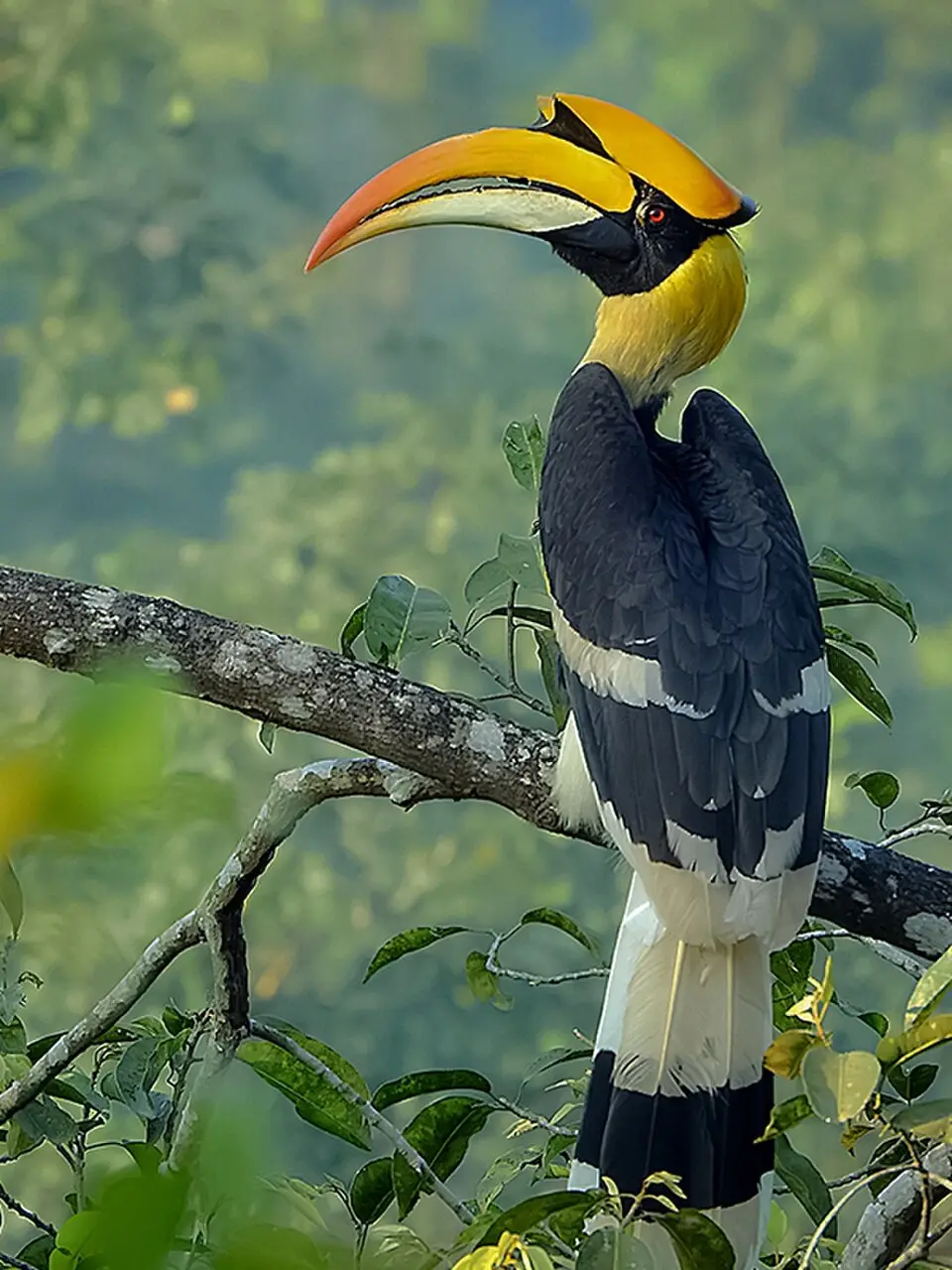
The project's own EC lists leopard, sloth bear, Indian wolf, four-horned antelope and pangolin among 14 Schedule-I mammals, and orders a human–animal conflict plan.
A contiguous forest linkage used by leopard, sambar, gaur, Shekru and langur. Karjat lies within it even though it is outside the sanctuary's legal line.
Lives in Bhimashankar's canopy near Karjat. Canopy fragmentation from submergence and transmission lines cuts its tree-to-tree routes.
Naneghat holds 45 Indian endemic plant taxa; Adoshi and Ajnawale plateaus hold six threatened endemics including Isoetes dixitei. Bhorande's upper reservoir is planned on Adoshi.
A devrai near Khubi shelters the Critically Endangered Ceropegia anantii; three Ceropegia species grow ~200 m from Adoshi.
One of the region's last free-flowing west-flowing rivers; about half its watershed is dense forest. It sustains the Katkari, a Particularly Vulnerable Tribal Group. The Supreme Court has stayed a dam on it.
Khubi, site of THDC's upper reservoir, links two wildlife sanctuaries; flamingos, leopard, sambar and barking deer recorded.
THDC's Malshej PSP is 3 km away.
Citizen scientists have logged 5,500+ observations of 1,600+ species, including rusty-spotted cat, striped hyena, leopard and Malabar trogon.
Western Ghats PSPs threaten sacred groves, sacred river origins and community-protected fish pools.
Karjat alone will excavate 110.78 lakh m³ of rock and dump 65.69 lakh m³ at three sites, on slopes where its EC requires landslide prevention. Raigad has seen deadly landslides (Taliye 2021, Irshalwadi 2023).
A systematic review found PSP construction causes habitat loss, invasive plants, altered hydrology and poorer water quality.
Building a pumped storage plant means tunnelling through a mountain. Karjat alone will excavate 110.78ⓘ lakh cubic metres of rock and dump 65.69ⓘ lakh cubic metres of it as muck at three sites, on slopes where its own EC demands landslide prevention. Documented Raigad district remembers Taliye in 2021 and Irshalwadi in 2023, where hillsides came down on villages.
The Western Ghats are home to at least 325ⓘ globally threatened species. Documented The question this chapter leaves is simple: what does a "9.6 hectares per GWh" figure measure, when what is lost is a corridor, a plateau, a grove and a river?
About 65%Documented“…cies found in the Western Ghats, 352 (54%) are endemic. Animal diversity is also exceptional, with amphibians (up to 179 species, 65% endemic), reptiles (157 species, 62% endemic), and fishes (219 species, 53% endemic).…”UNESCO World Heritage Centre: Western Ghats of the Western Ghats' amphibians, and 54%Documented“…of the 4-5,000 plant species recorded in the Ghats is very high: of the nearly 650 tree species found in the Western Ghats, 352 (54%) are endemic. Animal diversity is also exceptional, with amphibians (up to 179 species, 65% endemic), reptiles (157 species, 62%…”UNESCO World Heritage Centre: Western Ghats of its tree species, are found nowhere else on Earth.
Documented Source: UNESCO World Heritage Centre: Western Ghats
Chapter 3
Every pumped storage project in the Ghats arrives with a bill paid in land. Some of it is farmland bought from families. Much of it is forest.
14 projects in the Western Ghats have published both how much forest they need and how much energy they store. Together they need 1,331.2 hectares of forest for 139.1 GWh of storage. Documented
The largest project proposed in the state, JSW's 5,400ⓘ MW scheme in Bhor and Mahad, needs 645.62ⓘ ha, of which 241.22ⓘ ha is forest. Documented
Bhavali PSP
243.7 ha
Saidongar-1 PSP, Karjat
233 ha
Shirawta PSP
160.8 ha
Aruna Kolamb PSP
128.9 ha
Amba PSP
112.6 ha
Aruna PSP
73.6 ha
Pane PSP
66.9 ha
Malshej Ghat Bhorande PSP
60.9 ha
Savitri PSP
55.6 ha
Humbarli Birmani PSP
49.5 ha
Saidongar-2 PSP, Maval
35.6 ha
Bhivpuri PSP
20.1 ha
| Project | Forest (ha) | Trees |
|---|---|---|
| Bhavali PSP | 243.7 | – |
| Saidongar-1 PSP, Karjat | 233 | 48,557 |
| Shirawta PSP | 160.8 | 64,729 |
| Aruna Kolamb PSP | 128.9 | – |
| Amba PSP | 112.6 | – |
| Warasgaon–Warangi PSP | 90 | – |
| Aruna PSP | 73.6 | – |
| Pane PSP | 66.9 | – |
| Malshej Ghat Bhorande PSP | 60.9 | 35,000 |
| Savitri PSP | 55.6 | – |
| Humbarli Birmani PSP | 49.5 | – |
| Saidongar-2 PSP, Maval | 35.6 | 9,554 |
| Bhivpuri PSP | 20.1 | 6,834 |
To compare projects of different sizes, I divide forest by storage. Across the 14 projects, the average is 9.6 hectares of forest per GWh. The methodology shows the formula and every input.
The spread matters more than the average. Adani's Tarali project in Satara needed forest at first and was redesigned to use 0ⓘ ha. Tata's Bhivpuri needs only 20.14ⓘ ha. Siting is a choice, and it changes the forest bill many times over.
ha of forest per GWh of storage
| Project | Forest (ha) | GWh | ha of forest per GWh of storage |
|---|---|---|---|
| Bhavali PSP | 243.7 | 11 | 22.1 |
| Aruna Kolamb PSP | 128.9 | 7.4 | 17.5 |
| Shirawta PSP | 160.8 | 10.8 | 14.9 |
| Saidongar-1 PSP, Karjat | 233 | 17.1 | 13.6 |
| Amba PSP | 112.6 | 8.9 | 12.6 |
| Warasgaon–Warangi PSP | 90 | 9 | 10 |
| Aruna PSP | 73.6 | 9 | 8.2 |
| Pane PSP | 66.9 | 9.6 | 7 |
| Malshej Ghat Bhorande PSP | 60.9 | 9 | 6.8 |
| Humbarli Birmani PSP | 49.5 | 9.3 | 5.3 |
| Saidongar-2 PSP, Maval | 35.6 | 7.2 | 4.9 |
| Savitri PSP | 55.6 | 15.1 | 3.7 |
| Bhivpuri PSP | 20.1 | 6 | 3.4 |
| Tarali PSP | 0 | 9.8 | 0 |
Maharashtra has signed MoUs for 78,215 MW. At 6 hours each, that is about 469 GWh. At the average above, it would need roughly 4,500 hectares of forest. This is an illustration of scale, not a forecast: many MoUs will never be built, and better siting would lower it.
Paper figures tend to grow. When forest officers inspected MEIL's Ghosla site, its forest land went from 29.5ⓘ ha to 65.35ⓘ ha. Documented Warasgaon's went from 24.5ⓘ to 88.98ⓘ ha between applications. Documented
And the bill counts only land legally classed as forest. It leaves out:
Shirawta's forest has canopy density 0.7Documented“0.7 (Very Dense Forest) of Eco Class I and 64729 number of trees are”FAC (Advisory Committee) minutes, 8 May 2026, MoM ID FC/MOM/AC/969417/2026, page92 · 8 May 2026, 'very dense forest', and 64,729 treesDocumented“0.7 (Very Dense Forest) of Eco Class I and 64729 number of trees are”FAC (Advisory Committee) minutes, 8 May 2026, MoM ID FC/MOM/AC/969417/2026, page92 · 8 May 2026 are to be felled. The FAC still recommended Stage-I approval.
Documented Source: FAC (Advisory Committee) minutes, 8 May 2026, MoM ID FC/MOM/AC/969417/2026
Chapter 4
India's rules for a project like this are long. A developer needs a ToR, an EIA, a public hearing, an environmental clearance (EC) from the Expert Appraisal Committee, forest clearance in two stages, and the consent of forest-dwelling communities. Each step is meant to be a chance to say no, or to say "not here".
None of the steps below is illegal on its own. Together, they turn a review into a formality. Every item links to the document it comes from on the shortcuts page.
Resettlement "not applicable". The 2013 land acquisition law requires a rehabilitation plan for affected families. Karjat's draft EIA says no plan is needed, citing a 2014 Maharashtra notification that applies R&R only to private purchases of 1,000ⓘ hectares or more. The project needs 377ⓘ hectares. Documented
Outside the line, inside the habitat. Wildlife clearance and stricter scrutiny apply near protected areas. Karjat is described as 16ⓘ km from Bhimashankar and outside its eco-sensitive zone, so it needed no wildlife clearance. Its own EC lists 14ⓘ Schedule-I mammals in the study area. Documented
A reserve that is only "proposed". The forest committee found most of Karjat's forest inside the proposed Rajmachi Conservation Reserve and cleared it because the reserve is not yet notified (Chapter 1). Documented The Western Ghats ESA, which would also cover Karjat, has been issued in draft six times since 2014 and never made final. Reported The Gadgil panel wanted 64ⓘ% of the Western Ghats treated as ecologically sensitive; the Kasturirangan group cut it to 37ⓘ%. Reported A protection that stays a draft protects nothing.
Adani's Warasgaon–Warangi was rejected by the EAC on 27 September 2024 after its forest need more than tripled. A fresh ToR was granted on 31 December 2024. Documented Rejection was a delay, not a no.
Experts say the EAC almost never rejects a project. Himanshu Thakkar of SANDRP calls its rejection rate "practically zero" and says it does no assessment of options. Reported
The ToR conditions for THDC's Humbarli Birmani ask for Stage-I clearance of 55.64ⓘ ha of forest. That is the Savitri project's figure; Humbarli needs 49.5ⓘ ha. Documented The EAC visited NTPC's Amba site in June, before the rains, saw cactus and dry streams, and concluded the reservoirs "will enhance moisture content". Documented
No cumulative impact study exists for the Kal, Savitri, Pej, Kalu or Koyna basins. Documented Each project is assessed alone, as if the next valley were empty. Pane's upper dam is about 3ⓘ km from Warasgaon's. The upper reservoirs of NTPC's Amba and Avaada's Pawana Falyan, appraised separately, are about 1.5ⓘ km apart. Documented
Drilling as "forest activity". The Forest Advisory Committee recommended in July 2024 that exploratory drilling for hydro and pumped storage be treated as forest activity, needing no clearance, with felling of up to 100ⓘ trees. Documented Whether it has been notified is not confirmed.
Loosening the limits. The Central Electricity Authority's roadmap of January 2026 proposes allowing pumped storage in eco-sensitive zones that are not yet notified and within 10ⓘ km of protected areas, a lighter "White Category" for off-river projects, and relaxed Western Ghats conditions. Documented These are proposals, not law.
Fast-track from the top. In November 2025 the Chief Minister promised a "fast-track mechanism" for time-bound clearances, environmental approvals included. In March 2026 he ordered time-bound rollout of all 55ⓘ MoUs. Official claim The approvals were promised before the assessments were done.
A green label. Pumped storage is classed as renewable energy. That brings green certificates, priority lending and transmission waivers, without counting the forest carbon lost or checking what power is used to pump the water (Chapter 7). Documented
The 2013 land acquisition law (RFCTLARR) requires a rehabilitation and resettlement plan for affected families.
Resettlement declared 'not applicable' Documented
Documents ↗
Wildlife clearance and stricter scrutiny apply to projects near protected areas.
Outside the sanctuary line, inside the habitat Documented
Documents ↗
Rejection by the Expert Appraisal Committee should force a lower-impact redesign.
Rejected in September, back in December Documented
Documents ↗
Cumulative impact and carrying-capacity studies show what many projects do to one basin together.
Project by project, never the valley Documented
Documents ↗
Eco-sensitive zones, the 10 km buffer around protected areas, and Western Ghats conditions limit where projects can go.
Proposal to loosen the rules themselves Documented
Documents ↗
Any non-forest use of forest land needs prior clearance under the Forest (Conservation) Act.
Drilling redefined as 'forest activity' Documented
Documents ↗
Environmental and water approvals are meant to be independent assessments.
Fast-track promised before the projects are assessed Official claim
Documents ↗
Green incentives should reward net environmental benefit.
A 'green' label that ignores the forest Documented
Documents ↗
No construction before environmental and forest clearance and a public hearing.
Works on the ground before clearance (alleged) AllegedNot yet reviewed
Documents ↗
An EIA must survey the actual site's species and river.
Baseline data from the wrong river ReportedNot yet reviewed
Documents ↗
Tree enumeration fixes the compensation and the scale of felling.
Three different tree counts Reported
Documents ↗
Unused acquired land should revert to owners under the 2013 Act.
Land taken for one dam, reused for another (alleged) AllegedNot yet reviewed
Documents ↗
The EAC should independently test projects, including whether they are needed.
A regulator that 'practically' never says no Reported
Documents ↗
Activists have said the EAC skipped site visits before granting ECs. In September 2024 the EAC said a site visit would be carried out "wherever possible" for the 15ⓘ projects proposed in the Western Ghats. I checked the minutes: visits to Bhivpuri, Shirawta, Karjat and Pane are on record before their ECs. We mark that claim as not supported and keep it in the data with the reason. Whether a visit was enough is another question: at Karjat, the sub-committee judged the upper reservoir from the developer's drone footage, because it could not reach the site. Documented
The Western Ghats Ecologically Sensitive Area has been issued as a draft six times since 2014 and never made final. Maharashtra's share is 17,340Reported“Overall, the notification proposes to declare 56,825.7 sq km as ecologically sensitive, including 449 sq km in Gujarat, 17,340 sq km in Maharashtra, 1,461 sq km in Goa, 20,668 sq km in Karnataka, 6,914 sq km in Tamil Nadu, and 9,993.7 sq km in Kerala.”Onmanorama: sixth draft ESA notification (3 Aug 2024) sq km.
Reported Source: Onmanorama: sixth draft ESA notification (3 Aug 2024)
Chapter 6
Why so many projects, so fast? Because Maharashtra has promised a great deal of storage.
By March 2026 the state had signed about 55ⓘ MoUs for 78,215ⓘ MW of pumped storage. Official claim The Chief Minister said six of them, 10,300ⓘ MW in all, had their project reports approved by the Central Electricity Authority. Official claim
Today about 400ⓘ MW actually runs in the state: Bhira (150ⓘ MW) and Ghatghar (250ⓘ MW). Documented
Operating (2)Cleared or being built (6)MoU or ToR stage (22)Deferred, lapsed or rejected (4)
This site tracks 39 projects with 60,615 MW between them, 50,815 MW of it in the Western Ghats. Most are at an early stage: 23 have a ToR, which lets them start their EIA. A handful have an EC or forest clearance. One, Karjat, has started cutting. The projects page lists every one, sorted by trees and forest first.
An MoU is a promise, not a permit. But in this pipeline the promise has a way of arriving before the review. Rithwik's 1,200ⓘ MW Chandgad project got its ToR recommendation in March 2023, more than two years before the state signed its MoU. Documented And because the projects are reviewed one at a time (Chapter 4), nobody has asked how many of them the Sahyadri can hold.
Maharashtra has signed about 55Documented“Maharashtra Pumped Storage Power Projects: 55 MoUs Fast-Tracked”Electrical Mirror: ensure fast implementation of 55 MoUs, page55 · 13 April 2026 PSP MoUs for 78,215 MWDocumented“…eting, Maharashtra has signed 55 MoUs with various companies to develop pumped storage projects with a total proposed capacity of 78,215 MW. The projects are expected to attract an investment of around ₹4,16,701 crore and generate nearly 1,27,990 employment opportun…”Electrical Mirror: CM review of 55 PSP MoUs. Only about 400 MWDocumentedDerived on this siteBhira 150 MW + Ghatghar 250 MW.Wikipedia: Bhira Hydroelectric Project (150 MW pumped storage unit) actually runs today: Bhira (150 MWDocumented“…Specifications [ edit ] The plant's maximum output capacity is nominally 300 MW , generated by six 25 MW Pelton turbines and a 150 MW pumped storage generator added in 1997. In 2014 two 10 kW microturbine units were added to generate further power from the t…”Wikipedia: Bhira Hydroelectric Project (150 MW pumped storage unit)) and Ghatghar (250 MWDocumented“dated 10.06.1985 to the existing project Ghatghar 2x125MW PSP. The committee”2 × 125 MW = 250 MW.EAC 52nd meeting minutes, 13 Apr 2026, page4 · 13 April 2026).
Documented Source: Wikipedia: Bhira Hydroelectric Project (150 MW pumped storage unit) · EAC 52nd meeting minutes, 13 Apr 2026: existing Ghatghar 2x125 MW PSP · CEA: PSP development in country (Jun 2024) · Electrical Mirror: CM review of 55 PSP MoUs
Chapter 7
A pumped storage plant does not make electricity. It stores it, and it loses some along the way.
When solar floods the grid at midday, pumps push water from the lower reservoir up a tunnel to the upper one. The hill becomes a battery.
When demand peaks, the water falls back through turbines and makes electricity. About 22% of the energy is lost on the round trip.
Two reservoirs, a dam, tunnels, muck dumps, roads and power lines go onto forested hills. On record so far: 1,64,674 trees to be felled, from the 5 projects whose tree count is public, and 3,211 ha of forest land across 32 of the 39 projects.
Reservoirs and roads break up plateaus, streams and wildlife corridors that hold species found nowhere else, and take village land and grazing.
Every unit used to pump water uphill returns about 77.5% when the water comes down. Documented That is the round-trip efficiency in Tamil Nadu's 2026 tariff order, the best contractual figure in India. The rest is lost to friction, pumps and turbines.
If the projects tracked here ran at the rate Karjat's EC expects, they would deliver about 162 TWh a year and lose about 47 TWh a year doing it. That is about 2.7% of everything India generated in FY2025-26. This is a model, not a measurement; the methodology shows how.
Storage moves emissions in time. Whether it cuts or adds CO₂ depends on which power plants run more when it pumps, and which run less when it generates.
On today's grid the plants that change output first are mostly coal. If coal pumps the water and the stored power displaces coal later, every MWh delivered adds about 0.28 tonnes of CO₂, because of the loss. Across the pipeline that is up to 45 million tonnes a year. This is an upper bound, not a forecast.
If instead the pump uses solar power that would otherwise be wasted, storage cuts emissions, by about -0.88 tonnes per MWh once the plant's own construction is counted. That is the case for storage, and it is a real one.
The break-even is simple: storage cuts emissions only when more than 22.5% of the pumping energy is solar that would otherwise be thrown away, or 29.4% once construction is counted.
Break-even solar share: 22.5%
Developers state the CO₂ their projects will "avoid". Official claim Those claims assume every unit of pumping power is clean. No project I have read commits to publishing what time of day it pumps, or from what. Without that, nobody can say whether a given plant is a solar battery or a coal battery. And none of the "avoided" figures subtracts the forest carbon lost in Chapters 1 to 3.
A pumped storage project uses more electricity than it gives back. At 77.5%DocumentedDerived on this site“In its order dated April 30, the commission adopted a tariff discovered through competitive bidding, fixing an annual fixed charge of Rs 123 lakh per MW with a declared cycle loss of 22.5%, resulting in a total annual storage cost of Rs 150.675 lakh per MW.”100% − 22.5% cycle loss = 77.5% round-trip efficiency.DT Next: TNERC approves tariff for 500 MW pumped storage round-trip efficiency, 22.5Documented“In its order dated April 30, the commission adopted a tariff discovered through competitive bidding, fixing an annual fixed charge of Rs 123 lakh per MW with a declared cycle loss of 22.5%, resulting in a total annual storage cost of Rs 150.675 lakh per MW.”TNERC PSP tariff order 2026 (22.5% cycle loss) of every 100 units used for pumping are lost.
Documented Source: TNERC PSP tariff order 2026 (22.5% cycle loss) · NREL ATB 2023: round-trip efficiency 70–87%
Chapter 8
A pumped storage plant only helps if it pumps. Gujarat's 240ⓘ MW Kadana ran a pump-mode trial in 2004–05 and has not pumped since. Sardar Sarovar's 1,200ⓘ MW has never pumped at all. Documented Both are still counted as pumped storage in national plans.
Big tunnels in hard mountains run late and over budget. Australia's Snowy 2.0, first priced in 2017, now has a target cost of A$22.2ⓘ billion plus contingency, up to A$25ⓘ billion: more than 12ⓘ times that first estimate. Reported The Western Ghats are geologically different, but the lesson about underground risk travels.
A$ billion
| First estimate, 2017 | 2 |
| Target cost, Oct 2026 | 22.2 |
| With contingency | 25 |
Battery prices have fallen fast. Put on the same basis, rupees per MWh of storage capacity per year, recent Indian tenders give ₹8.6–14.3 lakh for battery storage and ₹9.7–13.6 lakh for pumped storage. Documented The ranges overlap. Batteries sit on a few hectares of already-cleared land, are built in months rather than years, and can go next to the solar parks they serve.
A tariff is a price, not the full cost, and batteries and eight-hour pumped storage do somewhat different jobs. The methodology lists every tender and its limits.
₹ lakh per MWh of storage capacity per year
Battery storagePumped storage
| Tender | h | ₹ lakh/MW/yr | ₹ lakh/MWh/yr |
|---|---|---|---|
| RVUNL 4-h BESS | 4 | 34.2 | 8.6 |
| JSW–UPPCL PSP 8-h | 8 | 77.2 | 9.7 |
| SECI PSP-I 8-h (fixed) | 8 | 109.1 | 13.6 |
| GUVNL 2-h BESS | 2 | 27.8 | 13.9 |
| MSEDCL 2-h BESS (2 GW/4 GWh) | 2 | 28.7 | 14.3 |
Even for pumped storage, the Sahyadri forest is not the only place to build. Existing reservoirs can be paired: Ghatghar Stage II would add 125ⓘ MW on 7.04ⓘ ha. Documented Tarali was redesigned off forest land altogether (Chapter 3). Old mines and off-river sites outside the Ghats exist. The order should be: brownfield and existing reservoirs first, non-forest off-river sites next, Ghats forest last, if at all.
Tata Power says Bhira, where a 150 MWOfficial claim“Bhira, Maharashtra 150 MW pumped hydro storage project; 1997”Tata Power: our pumped hydro history pumped storage unit was added in 1997 to a 1927 hydro station, was Asia's first pumped hydro storage project.
Official claim Source: Tata Power: our pumped hydro history
Chapter 9
Pumped storage has serious advocates, and the grid does need storage. Here is their case, in their terms.
Torrent says the Karjat project will avoid millions of tonnes of CO₂ a year, use less land than conventional hydro, and plant more trees than it fells. Official claim The Chief Minister says the projects bring clean power for peak demand and have completed their approvals. Official claim The Minister of State for Power, Meghna Bordikar, says Karjat was approved after "complying with all conditions" of the environment ministry. Official claim
All of this holds for well-sited, closed-loop projects charged with surplus solar. None of it requires the Sahyadri forest.
Bare-looking lateritic plateaus bloom in the monsoon. On the Kas plateau, about 80%Documented“Almost two thirds of over 100 phytogeographically significant species occur on the plateau top; these represent 26 plant families and 43 genera. About 80% of the species are restricted to the upper plateau and its escarpments.”Watve (2013), Kas plateau endemic plant diversity of the region's significant plant species grow only on the plateau top and its cliffs.
Documented Source: Watve (2013), Kas plateau endemic plant diversity
Chapter 10
Storage is needed. Forest is not a fair price for it. I ask for:
Follow what happens next on the timeline and in the news. Every number in this story, with its source, is in the data.
The Western Ghats are older than the Himalaya. UNESCO says their forests shape the Indian monsoon itself.
Documented Source: UNESCO World Heritage Centre: Western Ghats
या साइटवरील प्रत्येक आकडा मी दाखवू शकेन अशा एखाद्या दस्तऐवजातून आलेला आहे:
चूक दिसली, किंवा मी पाहावा असा एखादा दस्तऐवज तुमच्याकडे आहे? daredavil239804@gmail.com वर पान, दावा आणि शक्य असल्यास स्रोत लिहून पाठवा. मी 7 दिवसांत उत्तर देईन, आणि प्रत्येक दुरुस्तीची नोंद त्या पानावर केली जाईल.
कथा
झाडे, प्रजाती, मंजुरी, गावे आणि प्रकल्पांच्या बाजूचे म्हणणे, 10 छोट्या प्रकरणांत. प्रत्येक आकडा त्याच्या दस्तऐवजाशी जोडलेला आहे. एखादे प्रकरण निवडा, किंवा सुरुवातीपासून वाचा. पंप स्टोरेज प्रकल्प नवीन आहेत? ते कसे काम करतात ते पाहा.
प्रकरण 1
कर्जत तालुक्यातील पोटल गावाच्या वर सह्याद्री जंगलाच्या भिंतीसारखा साईडोंगर पठाराकडे चढत जातो. वन समितीच्या कागदावर ही 233ⓘ हेक्टर वनजमीन आहे. प्रत्यक्षात हा झाडे, झुडपे आणि गवताचा उतार आहे, जो पहिल्या पावसात हिरवागार होतो; सहा गावे ज्या खोऱ्यावर अवलंबून आहेत, त्या खोऱ्याचा हा वरचा काठ आहे.
Torrent Power ला इथे 3,000ⓘ MW चा पंप स्टोरेज प्रकल्प उभारायचा आहे: दोन जलाशय, एक पठारावर आणि एक खाली पेज नदीवर, बोगद्यांनी जोडलेले. वीज स्वस्त असते तेव्हा पाणी वर चढवले जाते, आणि महाग असते तेव्हा टर्बाइन्समधून खाली सोडले जाते. प्रकल्पाला एकूण 377ⓘ हेक्टर जमीन लागते.
वन विभागाबाहेर कोणालाच नेमके माहीत नाही. तीन अधिकृत आकडे आहेत, आणि ते जुळत नाहीत.
FAC minutes, 2 Dec 2025 (Stage-I recommended)
Torrent's draft EIA (Aug 2025)
FPJ (citing TOI)
| स्रोत | झाडे |
|---|---|
| FAC minutes, 2 Dec 2025 (Stage-I recommended) | 48,557 |
| Torrent's draft EIA (Aug 2025) | 48,000 |
| FPJ (citing TOI) | 32,490 |
समितीने मोजलेल्या झाडांपेक्षा परवानगीत इतकी कमी झाडे का आहेत, याचे स्पष्टीकरण कोणत्याही सार्वजनिक दस्तऐवजात नाही. टप्प्याटप्प्याने दिलेली मान्यता हे एक संभाव्य कारण आहे; त्याची खात्री मला करता आलेली नाही.
कार्यकर्त्यांच्या मते सर्वात मोठा आकडाही कमीच आहे. कर्जत तालुका पर्यावरण बचाव समितीचे ॲड. कैलास मोरे यांनी ThePrint ला सांगितले की प्रत्यक्षात तोडली जाणारी झाडे कागदावरच्या संख्येच्या कितीतरी पट आहेत. आरोप कोणत्याही सर्वेक्षणाने हा दावा तपासलेला नाही, आणि असे कोणतेही सर्वेक्षण सार्वजनिक नाही.
हे आकडे मी शेजारी शेजारी दाखवले आहेत; त्यांची सरासरी काढलेली नाही.
त्याच इतिवृत्तात नोंद आहे की 233ⓘ हेक्टरपैकी 197.77ⓘ हेक्टर प्रस्तावित राजमाची संवर्धन राखीव क्षेत्रात आहे, आणि जुलै 2024 च्या मसुद्यातील पश्चिम घाट ESA मध्येही आहे. अधिकृत दस्तऐवज यापैकी एकही अधिसूचित झालेले नाही. तरीही समितीने Stage-I मंजुरीची शिफारस केली, आणि राखीव क्षेत्र कधी अधिसूचित झाले तर पुन्हा मान्यता घ्या, असे विकासकाला सांगितले. मंत्रालयाने 31 डिसेंबर 2025 रोजी Stage-I दिली, आणि 12 जानेवारी 2026 रोजी EC आली.
गमावल्या जाणाऱ्या जंगलाची "भरपाई" सातारा जिल्ह्यातील पाटण तालुक्यात केमसे आणि धनकल येथील 252.76ⓘ हेक्टर जमिनीवर होणार आहे; पहिली जागा रद्द झाल्यानंतर ही जागा आली. ती जमीन आधीच जंगलासारखी आहे, आणि सह्याद्री व्याघ्र प्रकल्पाच्या बफर क्षेत्रात आहे. अधिकृत दस्तऐवज तिथले भरपाई वनीकरण म्हणजे एका जिल्ह्यापलीकडे, झाडांमध्येच झाडे लावणे.
दसऱ्याच्या सुमारास वृक्षतोड सुरू झाली. 26 ऑक्टोबर रोजी मुंबईत अभिनेते सयाजी शिंदे यांच्यासोबतच्या पत्रकार परिषदेत ॲड. मोरे यांनी आरोप केला की रोज शेकडो झाडे तोडली जात आहेत. आरोप आदित्य ठाकरे यांनी साईडोंगरला भेट देऊन याला "निसर्गाचा संहार" म्हटले. वृत्तांत प्रकल्पाने सर्व मंजुरी पूर्ण केल्या आहेत आणि स्थानिकांच्या चिंता विचारात घेतल्या जातील, असे मुख्यमंत्री देवेंद्र फडणवीस म्हणाले. अधिकृत दावा
27 ऑक्टोबर रोजी वन विभागाने वृक्षतोड थांबल्याचे सांगितले. वृत्तांत तोपर्यंत किती झाडे तोडली गेली, किंवा ही स्थगिती औपचारिक आहे का, हे विभागाने सांगितलेले नाही. पंतप्रधान नरेंद्र मोदी 3 नोव्हेंबर रोजी पायाभरणी करणार आहेत.
कर्जत हा फक्त असा प्रकल्प आहे जिथे झाडे आधी पडत आहेत; ती पडणार आहेत असा तो एकमेव प्रकल्प नाही. Tata Power च्या शिरवटा प्रकल्पाच्या समिती-कागदपत्रांत 64,729ⓘ झाडांची नोंद आहे, 0.7ⓘ वृक्षछत्र घनतेच्या जंगलात, ज्याला वन सर्वेक्षण अतिघनदाट जंगल म्हणते. अधिकृत दस्तऐवज भोरांडे येथील Adani च्या माळशेज घाट प्रकल्पात सुमारे 35,000ⓘ झाडे मोजली आहेत, मावळमधील Torrent च्या दुसऱ्या प्रकल्पात 9,554ⓘ, आणि Tata च्या भिवपुरीत 6,834ⓘ.
ज्या प्रकल्पांनी झाडांची संख्या प्रसिद्ध केली आहे, त्यांची बेरीज 1,64,674 झाडे, नोंदीनुसार इतकी होते. नियोजित बहुतेक प्रकल्पांनी अशी संख्या प्रसिद्धच केलेली नाही.
कर्जतला मंजुरी देणाऱ्या वन समितीने 233 haअधिकृत दस्तऐवजमूळ इंग्रजी दस्तऐवजातील उतारा“…te Change to review the project’s environmental implications. The organisation has raised concerns over the proposed diversion of 233 hectares of forest land, warning of potential impacts on the Saidongar area’s natural resources, wildlife and local communities.…”FPJ (citing TOI): felling permission of 14 Oct 2026 · 25 ऑक्टोबर, 2026 वर 48,557अधिकृत दस्तऐवजमूळ इंग्रजी दस्तऐवजातील उतारा“Also, the proposal involves felling of 48557 number of trees.”FAC minutes, 2 Dec 2025 (Saidongar-1 Stage-I), पान177 · 2 डिसेंबर, 2025 झाडे तोडली जाणार असल्याची नोंद केली; Torrent च्या स्वतःच्या EIA मसुद्यात 'सुमारे 48,000अधिकृत दस्तऐवजमूळ इंग्रजी दस्तऐवजातील उतारा“clearing of 48,000 nos. of trees. (Trees proposed for plantation on Muck disposal area also”Saidongar-1 draft EIA executive summary (MPCB), पान21 · ऑगस्ट 2025' असे म्हटले होते. ऑक्टोबर 2026 मध्ये वृत्तांतात आलेली वृक्षतोड परवानगी 32,490अधिकृत दस्तऐवजमूळ इंग्रजी दस्तऐवजातील उतारा“…Pawar Oppose Cutting Of 32,490 Trees For Karjat Power Project A forest order dated October 14, 2026, reportedly permits felling 32,490 trees in Karjat forests for Torrent Power’s proposed 3,000 MW Saidongar-I project. Commenting on the opposition criticism, state…”FPJ (citing TOI): felling permission of 14 Oct 2026 · 25 ऑक्टोबर, 2026 झाडांची आहे.
अधिकृत दस्तऐवज स्रोत: FAC minutes, 2 Dec 2025 (Saidongar-1 Stage-I) · FPJ (citing TOI): felling permission of 14 Oct 2026 · Saidongar-1 draft EIA executive summary (MPCB)
प्रकरण 2
झाडांची संख्या मोजायला सर्वात सोपी, आणि जे गमावले जाते त्यातला सर्वात लहान भाग. सह्याद्री म्हणजे फक्त झाडांचा समूह नाही. जंगल, पठार, नदी आणि देवराई यांची ती एक जिवंत व्यवस्था आहे, आणि हे प्रकल्प या चारही गोष्टींना छेद देतात.
Torrent च्या म्हणण्यानुसार कर्जतची जागा भीमाशंकर वन्यजीव अभयारण्यापासून 16ⓘ km वर आणि त्याच्या पर्यावरण-संवेदनशील क्षेत्राबाहेर आहे. अधिकृत दावा कायदेशीर सीमांच्या नकाशावर हे खरे आहे. प्राणी कुठून ये-जा करतात त्या नकाशावर मात्र हा मुद्दाच नाही.
कर्जत भीमाशंकरला माळशेज घाटाशी आणि पुढे उत्तर सह्याद्रीच्या उरलेल्या भागाशी जोडणाऱ्या वनपट्ट्यावर आहे. वृत्तांत बिबट्या, सांबर, गवा, वानर आणि महाराष्ट्राचा राज्यप्राणी शेकरू हा पट्टा वापरतात. शेकरू वृक्षछत्रात राहते आणि झाडावरून झाडावर फिरते; जलाशय किंवा वीजवाहिनीसाठी साफ केलेला पट्टा तिच्यासाठी भिंतच ठरतो.
प्रकल्पाच्याच EC मध्ये अभ्यासक्षेत्रात 14ⓘ Schedule-I सस्तन प्राणी नोंदले आहेत, त्यात बिबट्या, अस्वल, भारतीय लांडगा, चौशिंगा आणि खवले मांजर आहेत, आणि मानव–वन्यजीव संघर्षाचा आराखडा करण्याचा आदेश आहे. अधिकृत दस्तऐवज Schedule-I हे भारतीय वन्यजीव कायद्यातील सर्वोच्च संरक्षण आहे. ज्या प्रकल्पाला शेजाऱ्यांसोबतच्या संघर्षासाठी आराखडा लागतो, तो वन्यजीवांपासून दूर नाही.
आणखी उत्तरेला, THDC चा माळशेज प्रकल्प कळसूबाई-हरिश्चंद्रगड वन्यजीव अभयारण्यापासून सुमारे 3ⓘ km वर आहे, आणि खुबी येथील त्याचा वरचा जलाशय हरिश्चंद्रगड आणि भीमाशंकर यांच्यातील वन्यजीव मार्गावर आहे. वृत्तांत दक्षिणेला, Adani चा निवकणे प्रकल्प सह्याद्री व्याघ्र प्रकल्पाच्या बफर क्षेत्रापासून सुमारे 150ⓘ मीटरवर आहे. अधिकृत दस्तऐवज
अभयारण्य किंवा राष्ट्रीय उद्यानाची सीमाESZ, पर्यावरण-संवेदनशील क्षेत्र (तुटक रेषा: प्रस्तावित) पंप स्टोरेज प्रकल्प
| प्रकल्प | जवळचे संरक्षित क्षेत्र | km |
|---|---|---|
| घाटघर PSP Stage II | कळसूबाई-हरिश्चंद्रगड अभयारण्य | 0 |
| कोयना–निवकणे PSP | सह्याद्री व्याघ्र प्रकल्प (बफर क्षेत्र) | 0.2 |
| THDC माळशेज घाट PSP | कळसूबाई-हरिश्चंद्रगड अभयारण्य | 3 |
| हुंबरळी बिरमणी PSP | कोयना अभयारण्य (सह्याद्री व्याघ्र प्रकल्पाचा गाभा) | 8.8 |
| माळशेज घाट भोरांडे PSP | भीमाशंकर वन्यजीव अभयारण्य | 10.8 |
| साईडोंगर-2 PSP, मावळ | भीमाशंकर वन्यजीव अभयारण्य | 14.5 |
| साईडोंगर-1 PSP, कर्जत | भीमाशंकर वन्यजीव अभयारण्य | 15.5 |
| आंबेगाव PSP | भीमाशंकर वन्यजीव अभयारण्य | 16 |
| शिरवटा PSP | भीमाशंकर वन्यजीव अभयारण्य | 19.7 |
वरच्या जलाशयांना कड्याच्या माथ्यावर सपाट जमीन लागते. सह्याद्रीत याचा अर्थ जांभ्या दगडाची पठारे, म्हणजे सडा. वर्षातील बहुतेक काळ ते ओसाड दिसतात. पावसाळ्यात ते फुलतात.
Adani भोरांडेचा वरचा जलाशय ज्या आडोशी पठारावर करू पाहते, त्याच्या शेजारच्या नाणेघाट पठारावर फक्त भारतात आढळणारे 45ⓘ वनस्पती-वर्गक आहेत. आडोशी आणि अजनावळे पठारांवर Isoetes dixitei या जलवनस्पतीसह सहा संकटग्रस्त स्थानिक प्रजाती आहेत. वृत्तांत कास पठारावर, या प्रदेशातील महत्त्वाच्या वनस्पतीप्रजातींपैकी सुमारे 80ⓘ% फक्त पठारमाथ्यावर आणि कड्यांवर उगवतात. अधिकृत दस्तऐवज
पठारे अनेकदा "वनेतर" म्हणून वर्गीकृत असल्याने, ती नष्ट झाल्याचे प्रकरण 3 मधील जंगलाच्या आकड्यांत दिसत नाही.
महाराष्ट्रात हजारो देवराया आहेत, गावांनी आपल्या देवतेसाठी राखलेली वने. एका अभ्यासानुसार सुमारे 2,800ⓘ. वृत्तांत अनेक देवरायांमध्ये त्या खोऱ्यातील सर्वात जुनी उरलेली झाडे आहेत. खुबीजवळची आडराई देवराई अतिसंकटग्रस्त म्हणून नोंदलेल्या Ceropegia anantii ला आश्रय देते, आणि आडोशीपासून सुमारे 200ⓘ मीटरवर Ceropegia च्या आणखी तीन प्रजाती उगवतात. वृत्तांत मी वाचलेल्या कोणत्याही मंजुरी-कागदपत्रात प्रकल्प क्षेत्रातील देवराईचा नकाशा नाही.
माळशेजखालची काळू नदी या प्रदेशातील धरण नसलेल्या शेवटच्या पश्चिमवाहिनी नद्यांपैकी एक आहे. तिच्या पाणलोटाचा सुमारे निम्मा भाग घनदाट जंगल आहे, आणि ती कातकरी या विशेष असुरक्षित आदिवासी गटाचा आधार आहे. तिच्यावरील एका धरणाला सर्वोच्च न्यायालयाने स्थगिती दिली आहे. वृत्तांत भोरांडे प्रकल्प काळूचे पाणी घाटमाथ्याच्या पलीकडे, कुकडी खोऱ्याजवळच्या जलाशयात उचलेल.
कर्जत, भिवपुरी, शिरवटा आणि वरसगाव हे open-loop आराखडे आहेत: त्यांचा एक जलाशय नदीवर असतो, आणि नदीतील मासे, प्रवाह आणि पूर हे सगळे यंत्राचाच भाग बनतात. अधिकृत दस्तऐवज
एकट्या मुरबाड तालुक्यात नागरिक-वैज्ञानिकांनी 1,600ⓘ हून अधिक प्रजातींची 5,500ⓘ हून अधिक निरीक्षणे नोंदवली आहेत, त्यात वाघाटी, पट्टेरी तरस आणि मलबार कर्णा आहेत. वृत्तांत त्यापैकी एकही EIA मध्ये नाही.
प्रकल्पाच्याच EC मध्ये 14 Schedule-I सस्तन प्राण्यांमध्ये बिबट्या, अस्वल, भारतीय लांडगा, चौशिंगा आणि खवले मांजर नोंदले आहेत, आणि मानव–वन्यजीव संघर्ष आराखडा बनवण्याचा आदेश आहे.
बिबट्या, सांबर, गवा, शेकरू आणि वानर वापरत असलेला सलग जंगलाचा दुवा. अभयारण्याच्या कायदेशीर सीमेबाहेर असूनही कर्जत याच पट्ट्यात येतो.
कर्जतजवळ भीमाशंकरच्या वृक्षछत्रात राहते. पाण्याखाली जाणारी जमीन आणि वीजवाहिन्यांमुळे वृक्षछत्र तुटते, आणि त्याचे झाडावरून झाडावर जाण्याचे मार्ग तुटतात.
नाणेघाटात फक्त भारतात आढळणाऱ्या 45 वनस्पती-वर्गक आहेत; आडोशी आणि अजनावळे पठारांवर Isoetes dixitei सह सहा संकटग्रस्त स्थानिक प्रजाती आहेत. भोरांडेचा वरचा जलाशय आडोशीवर नियोजित आहे.
खुबीजवळची एक देवराई अतिसंकटग्रस्त Ceropegia anantii ला आश्रय देते; आडोशीपासून ~200 m वर Ceropegia च्या तीन प्रजाती उगवतात.
या प्रदेशातील शेवटच्या मुक्त वाहणाऱ्या पश्चिमवाहिनी नद्यांपैकी एक; तिच्या पाणलोटाचा सुमारे निम्मा भाग घनदाट जंगल आहे. ती कातकरी या विशेष असुरक्षित आदिवासी गटाचा आधार आहे. तिच्यावरील एका धरणाला सर्वोच्च न्यायालयाने स्थगिती दिली आहे.
THDC च्या वरच्या जलाशयाची जागा असलेले खुबी दोन वन्यजीव अभयारण्यांना जोडते; इथे रोहित (flamingo), बिबट्या, सांबर आणि भेकर नोंदले आहेत.
THDC चा माळशेज PSP इथून 3 km वर आहे.
नागरिक-वैज्ञानिकांनी 1,600+ प्रजातींची 5,500+ निरीक्षणे नोंदवली आहेत, त्यात वाघाटी, पट्टेरी तरस, बिबट्या आणि मलबार कर्णा (Malabar trogon) यांचा समावेश आहे.
पश्चिम घाटातील PSP मुळे देवराया, नद्यांची पवित्र उगमस्थाने आणि गावांनी राखलेले माशांचे डोह धोक्यात आहेत.
एकट्या कर्जतमध्ये 110.78 लाख m³ खडक खोदला जाईल आणि 65.69 लाख m³ तीन जागांवर टाकला जाईल, अशा उतारांवर जिथे EC नुसार दरड रोखण्याचे उपाय आवश्यक आहेत. रायगडने प्राणघातक दरडी पाहिल्या आहेत (तळिये 2021, इर्शाळवाडी 2023).
एका पद्धतशीर अभ्यास-आढाव्यानुसार PSP बांधकामामुळे अधिवास नष्ट होतो, उपऱ्या वनस्पती पसरतात, जलचक्र बदलते आणि पाण्याचा दर्जा घसरतो.
पंप स्टोरेज प्रकल्प बांधणे म्हणजे डोंगर पोखरून बोगदे करणे. एकट्या कर्जतमध्ये 110.78ⓘ लाख घनमीटर खडक खोदला जाईल, आणि त्यातील 65.69ⓘ लाख घनमीटर राडारोडा तीन जागांवर टाकला जाईल, अशा उतारांवर जिथे प्रकल्पाचीच EC दरड रोखण्याचे उपाय मागते. अधिकृत दस्तऐवज रायगड जिल्ह्याला 2021 मधील तळिये आणि 2023 मधील इर्शाळवाडी आठवतात, जिथे डोंगरकडे गावांवर कोसळले.
पश्चिम घाटात जागतिक स्तरावर संकटग्रस्त किमान 325ⓘ प्रजाती राहतात. अधिकृत दस्तऐवज हे प्रकरण एक सोपा प्रश्न मागे ठेवते: जे गमावले जाते ते एक वन्यजीव मार्ग, एक पठार, एक देवराई आणि एक नदी असेल, तर "प्रति GWh 9.6 हेक्टर" हा आकडा नेमके काय मोजतो?
पश्चिम घाटातील सुमारे 65%अधिकृत दस्तऐवजमूळ इंग्रजी दस्तऐवजातील उतारा“…cies found in the Western Ghats, 352 (54%) are endemic. Animal diversity is also exceptional, with amphibians (up to 179 species, 65% endemic), reptiles (157 species, 62% endemic), and fishes (219 species, 53% endemic).…”UNESCO World Heritage Centre: Western Ghats उभयचर आणि 54%अधिकृत दस्तऐवजमूळ इंग्रजी दस्तऐवजातील उतारा“…of the 4-5,000 plant species recorded in the Ghats is very high: of the nearly 650 tree species found in the Western Ghats, 352 (54%) are endemic. Animal diversity is also exceptional, with amphibians (up to 179 species, 65% endemic), reptiles (157 species, 62%…”UNESCO World Heritage Centre: Western Ghats वृक्षप्रजाती पृथ्वीवर इतरत्र कुठेही आढळत नाहीत.
अधिकृत दस्तऐवज स्रोत: UNESCO World Heritage Centre: Western Ghats
प्रकरण 3
घाटातील प्रत्येक पंप स्टोरेज प्रकल्प जमिनीत चुकवायचे एक बिल घेऊन येतो. त्यातला काही भाग कुटुंबांकडून खरेदी केलेली शेतजमीन असतो. बराचसा भाग जंगल असतो.
पश्चिम घाटातील 14 प्रकल्पांनी त्यांना किती जंगल लागते आणि ते किती ऊर्जा साठवतात, हे दोन्ही प्रसिद्ध केले आहे. मिळून त्यांना 139.1 GWh साठवणीसाठी 1,331.2 हेक्टर जंगल लागते. अधिकृत दस्तऐवज
राज्यात प्रस्तावित सर्वात मोठ्या प्रकल्पाला, भोर आणि महाडमधील JSW च्या 5,400ⓘ MW च्या योजनेला, 645.62ⓘ ha लागते, त्यापैकी 241.22ⓘ ha जंगल आहे. अधिकृत दस्तऐवज
भावली PSP
243.7 ha
साईडोंगर-1 PSP, कर्जत
233 ha
शिरवटा PSP
160.8 ha
अरुणा कोळंब PSP
128.9 ha
आंबा PSP
112.6 ha
वरसगाव–वरंगी PSP
90 ha
अरुणा PSP
73.6 ha
पाणे PSP
66.9 ha
माळशेज घाट भोरांडे PSP
60.9 ha
सावित्री PSP
55.6 ha
हुंबरळी बिरमणी PSP
49.5 ha
साईडोंगर-2 PSP, मावळ
35.6 ha
भिवपुरी PSP
20.1 ha
| प्रकल्प | वनजमीन (ha) | झाडे |
|---|---|---|
| भावली PSP | 243.7 | – |
| साईडोंगर-1 PSP, कर्जत | 233 | 48,557 |
| शिरवटा PSP | 160.8 | 64,729 |
| अरुणा कोळंब PSP | 128.9 | – |
| आंबा PSP | 112.6 | – |
| वरसगाव–वरंगी PSP | 90 | – |
| अरुणा PSP | 73.6 | – |
| पाणे PSP | 66.9 | – |
| माळशेज घाट भोरांडे PSP | 60.9 | 35,000 |
| सावित्री PSP | 55.6 | – |
| हुंबरळी बिरमणी PSP | 49.5 | – |
| साईडोंगर-2 PSP, मावळ | 35.6 | 9,554 |
| भिवपुरी PSP | 20.1 | 6,834 |
वेगवेगळ्या आकारांच्या प्रकल्पांची तुलना करण्यासाठी मी जंगलाला साठवणीने भागले आहे. 14 प्रकल्पांची सरासरी प्रति GWh 9.6 हेक्टर जंगल येते. कार्यपद्धती पानावर सूत्र आणि प्रत्येक गृहीतक दिले आहे.
सरासरीपेक्षा फरकाची व्याप्ती जास्त महत्त्वाची आहे. साताऱ्यातील Adani च्या तारळी प्रकल्पाला सुरुवातीला जंगल लागत होते; नव्या आराखड्यात 0ⓘ ha लागते. Tata च्या भिवपुरीला फक्त 20.14ⓘ ha लागते. जागेची निवड हा पर्याय आहे, आणि त्याने जंगलाचे बिल अनेक पटींनी बदलते.
प्रति GWh साठवणीमागे ha जंगल
| प्रकल्प | वनजमीन (ha) | GWh | प्रति GWh साठवणीमागे ha जंगल |
|---|---|---|---|
| भावली PSP | 243.7 | 11 | 22.1 |
| अरुणा कोळंब PSP | 128.9 | 7.4 | 17.5 |
| शिरवटा PSP | 160.8 | 10.8 | 14.9 |
| साईडोंगर-1 PSP, कर्जत | 233 | 17.1 | 13.6 |
| आंबा PSP | 112.6 | 8.9 | 12.6 |
| वरसगाव–वरंगी PSP | 90 | 9 | 10 |
| अरुणा PSP | 73.6 | 9 | 8.2 |
| पाणे PSP | 66.9 | 9.6 | 7 |
| माळशेज घाट भोरांडे PSP | 60.9 | 9 | 6.8 |
| हुंबरळी बिरमणी PSP | 49.5 | 9.3 | 5.3 |
| साईडोंगर-2 PSP, मावळ | 35.6 | 7.2 | 4.9 |
| सावित्री PSP | 55.6 | 15.1 | 3.7 |
| भिवपुरी PSP | 20.1 | 6 | 3.4 |
| तारळी PSP | 0 | 9.8 | 0 |
महाराष्ट्राने 78,215 MW साठी MoU केले आहेत. प्रत्येकी 6 तास धरले, तर ते सुमारे 469 GWh होते. वरच्या सरासरीने, त्याला अंदाजे 4,500 हेक्टर जंगल लागेल. हा व्याप्तीचा अंदाज आहे, भाकीत नाही: अनेक MoU कधीच उभे राहणार नाहीत, आणि चांगल्या जागा निवडल्या तर हा आकडा कमी होईल.
कागदावरचे आकडे वाढत जातात. वन अधिकाऱ्यांनी MEIL च्या घोसला जागेची पाहणी केली तेव्हा तिची वनजमीन 29.5ⓘ ha वरून 65.35ⓘ ha झाली. अधिकृत दस्तऐवज दोन अर्जांदरम्यान वरसगावची वनजमीन 24.5ⓘ वरून 88.98ⓘ ha झाली. अधिकृत दस्तऐवज
आणि हे बिल फक्त कायदेशीररीत्या वन म्हणून वर्गीकृत जमीन मोजते. त्यात हे येत नाही:
शिरवटाच्या जंगलाची वृक्षछत्र घनता 0.7अधिकृत दस्तऐवजमूळ इंग्रजी दस्तऐवजातील उतारा“0.7 (Very Dense Forest) of Eco Class I and 64729 number of trees are”FAC (Advisory Committee) minutes, 8 May 2026, MoM ID FC/MOM/AC/969417/2026, पान92 · 8 मे, 2026 आहे, म्हणजे 'अतिघनदाट जंगल', आणि तिथे 64,729अधिकृत दस्तऐवजमूळ इंग्रजी दस्तऐवजातील उतारा“0.7 (Very Dense Forest) of Eco Class I and 64729 number of trees are”FAC (Advisory Committee) minutes, 8 May 2026, MoM ID FC/MOM/AC/969417/2026, पान92 · 8 मे, 2026 झाडे तोडली जाणार आहेत. तरीही FAC ने Stage-I मान्यतेची शिफारस केली.
अधिकृत दस्तऐवज स्रोत: FAC (Advisory Committee) minutes, 8 May 2026, MoM ID FC/MOM/AC/969417/2026
प्रकरण 4
अशा प्रकल्पांसाठी भारताचे नियम लांबलचक आहेत. विकासकाला ToR, EIA, जनसुनावणी, तज्ज्ञ मूल्यांकन समितीकडून पर्यावरण मंजुरी (EC), दोन टप्प्यांत वन मंजुरी आणि वनवासी समुदायांची संमती लागते. प्रत्येक पायरी म्हणजे 'नाही' म्हणण्याची, किंवा 'इथे नको' म्हणण्याची संधी असायला हवी.
खालीलपैकी कोणतीही पायरी एकट्याने बेकायदा नाही. पण सगळ्या मिळून छाननीला औपचारिकतेत बदलतात. प्रत्येक मुद्दा पळवाटा पानावर त्याच्या मूळ दस्तऐवजाशी जोडलेला आहे.
पुनर्वसन "लागू नाही". 2013 चा भूसंपादन कायदा बाधित कुटुंबांसाठी पुनर्वसन आराखडा आवश्यक करतो. कर्जतच्या EIA मसुद्यात असा आराखडा लागत नाही असे म्हटले आहे; त्यासाठी 2014 च्या एका महाराष्ट्र अधिसूचनेचा आधार घेतला आहे, जी 1,000ⓘ हेक्टर किंवा त्याहून मोठ्या खासगी खरेदीलाच पुनर्वसन (R&R) लागू करते. प्रकल्पाला 377ⓘ हेक्टर लागते. अधिकृत दस्तऐवज
रेषेबाहेर, पण अधिवासाच्या आत. संरक्षित क्षेत्रांजवळ वन्यजीव मंजुरी आणि अधिक कडक छाननी लागू होते. कर्जत भीमाशंकरपासून 16ⓘ km वर आणि त्याच्या पर्यावरण-संवेदनशील क्षेत्राबाहेर असल्याचे वर्णन केले गेले, म्हणून त्याला वन्यजीव मंजुरी लागली नाही. तरीही त्याच्याच EC मध्ये अभ्यासक्षेत्रात 14ⓘ Schedule-I सस्तन प्राणी नोंदले आहेत. अधिकृत दस्तऐवज
फक्त "प्रस्तावित" राखीव क्षेत्र. कर्जतचे बहुतेक जंगल प्रस्तावित राजमाची संवर्धन राखीव क्षेत्रात असल्याचे वन समितीला आढळले, आणि राखीव क्षेत्र अद्याप अधिसूचित नसल्याने तिने मंजुरी दिली (प्रकरण 1). अधिकृत दस्तऐवज कर्जतलाही व्यापणाऱ्या पश्चिम घाट ESA चा मसुदा 2014 पासून सहा वेळा प्रसिद्ध झाला, पण तो कधीच अंतिम झाला नाही. वृत्तांत गाडगीळ समितीला पश्चिम घाटाचे 64ⓘ% क्षेत्र पर्यावरणदृष्ट्या संवेदनशील मानावे असे वाटत होते; कस्तुरीरंगन गटाने ते 37ⓘ% वर आणले. वृत्तांत मसुद्यातच राहिलेले संरक्षण काहीच संरक्षण करत नाही.
जंगलाची गरज तिपटीहून अधिक झाल्यानंतर 27 सप्टेंबर 2024 रोजी EAC ने Adani चा वरसगाव–वरंगी प्रकल्प नाकारला. 31 डिसेंबर 2024 रोजी त्याला नवे ToR मिळाले. अधिकृत दस्तऐवज नकार म्हणजे फक्त विलंब ठरला, 'नाही' नव्हे.
EAC जवळजवळ कधीच प्रकल्प नाकारत नाही, असे तज्ज्ञ म्हणतात. SANDRP चे हिमांशू ठक्कर तिच्या नकाराचे प्रमाण "जवळजवळ शून्य" असल्याचे सांगतात, आणि ती पर्यायांचे कोणतेही मूल्यांकन करत नाही, असे म्हणतात. वृत्तांत
THDC च्या हुंबरळी बिरमणीच्या ToR अटींमध्ये 55.64ⓘ ha जंगलासाठी Stage-I मंजुरी मागितली आहे. तो सावित्री प्रकल्पाचा आकडा आहे; हुंबरळीला 49.5ⓘ ha लागते. अधिकृत दस्तऐवज EAC ने NTPC च्या आंब्याच्या जागेची पाहणी जूनमध्ये, पावसाआधी केली; तिला निवडुंग आणि कोरडे ओढे दिसले, आणि जलाशयांमुळे "ओलावा वाढेल" असा निष्कर्ष तिने काढला. अधिकृत दस्तऐवज
काळ, सावित्री, पेज, काळू किंवा कोयना खोऱ्यांसाठी कोणताही एकत्रित परिणाम अभ्यास अस्तित्वात नाही. अधिकृत दस्तऐवज पुढचे खोरे रिकामे असल्यासारखे प्रत्येक प्रकल्पाचे मूल्यांकन स्वतंत्रपणे होते. पाणेचे वरचे धरण वरसगावच्या धरणापासून सुमारे 3ⓘ km वर आहे. वेगवेगळे मूल्यांकन झालेल्या NTPC च्या आंबा आणि Avaada च्या पवना फळ्याण प्रकल्पांचे वरचे जलाशय एकमेकांपासून सुमारे 1.5ⓘ km अंतरावर आहेत. अधिकृत दस्तऐवज
ड्रिलिंग म्हणजे "वन कार्य". जलविद्युत आणि पंप स्टोरेज प्रकल्पांसाठीचे शोध-ड्रिलिंग वन कार्य मानावे, त्याला मंजुरी लागू नये, आणि 100ⓘ झाडांपर्यंत वृक्षतोड करता यावी, अशी शिफारस वन सल्लागार समितीने जुलै 2024 मध्ये केली. अधिकृत दस्तऐवज याची अधिसूचना निघाली आहे का, याची खात्री नाही.
मर्यादा सैल करणे. केंद्रीय विद्युत प्राधिकरणाच्या (CEA) जानेवारी 2026 च्या आराखड्यात अद्याप अधिसूचित न झालेल्या पर्यावरण-संवेदनशील क्षेत्रांत आणि संरक्षित क्षेत्रांपासून 10ⓘ km च्या आत पंप स्टोरेज प्रकल्पांना परवानगी, नदीबाहेरच्या प्रकल्पांसाठी सौम्य "White Category", आणि पश्चिम घाटासाठीच्या अटी शिथिल करण्याचे प्रस्ताव आहेत. अधिकृत दस्तऐवज हे प्रस्ताव आहेत, कायदा नाही.
वरून फास्ट-ट्रॅक. नोव्हेंबर 2025 मध्ये मुख्यमंत्र्यांनी पर्यावरण मंजुरीसह कालबद्ध मंजुरींसाठी "फास्ट-ट्रॅक यंत्रणे"चे आश्वासन दिले. मार्च 2026 मध्ये त्यांनी सर्व 55ⓘ MoU कालबद्धरीत्या राबवण्याचे आदेश दिले. अधिकृत दावा मूल्यांकने होण्याआधीच मंजुरींचे आश्वासन दिले गेले.
हरित शिक्का. पंप स्टोरेज नवीकरणीय ऊर्जा म्हणून वर्गीकृत आहे. त्यामुळे हरित प्रमाणपत्रे, प्राधान्याने कर्ज आणि पारेषण शुल्कात सूट मिळते, पण गमावलेल्या जंगलातील कार्बन मोजला जात नाही, किंवा पाणी चढवण्यासाठी कोणती वीज वापरली जाते हेही तपासले जात नाही (प्रकरण 7). अधिकृत दस्तऐवज
2013 चा भूसंपादन कायदा (RFCTLARR) बाधित कुटुंबांसाठी पुनर्वसनाचा आराखडा आवश्यक करतो.
पुनर्वसन 'लागू नाही' असे जाहीर अधिकृत दस्तऐवज
दस्तऐवज ↗
संरक्षित क्षेत्रांजवळच्या प्रकल्पांना वन्यजीव मंजुरी आणि अधिक कडक छाननी लागू होते.
अभयारण्याच्या रेषेबाहेर, अधिवासाच्या आत अधिकृत दस्तऐवज
दस्तऐवज ↗
तज्ज्ञ मूल्यांकन समितीने नाकारल्यावर कमी परिणाम करणारा नवा आराखडा करणे भाग पडायला हवे.
सप्टेंबरमध्ये नाकारला, डिसेंबरमध्ये परत अधिकृत दस्तऐवज
दस्तऐवज ↗
एकत्रित परिणाम आणि धारणक्षमतेचे अभ्यास अनेक प्रकल्प मिळून एका खोऱ्यावर काय परिणाम करतात ते दाखवतात.
प्रकल्पानुसार प्रकल्प, खोरे कधीच नाही अधिकृत दस्तऐवज
दस्तऐवज ↗
पर्यावरण-संवेदनशील क्षेत्रे, संरक्षित क्षेत्रांभोवतीचा 10 km चा पट्टा आणि पश्चिम घाटासाठीच्या अटी प्रकल्प कुठे येऊ शकतात यावर मर्यादा घालतात.
नियमच शिथिल करण्याचा प्रस्ताव अधिकृत दस्तऐवज
दस्तऐवज ↗
वनजमिनीच्या कोणत्याही वनेतर वापरासाठी Forest (Conservation) Act नुसार आधी मंजुरी लागते.
ड्रिलिंगला 'वन कार्य' म्हटले अधिकृत दस्तऐवज
दस्तऐवज ↗
पर्यावरण आणि पाण्याच्या मंजुरी स्वतंत्र मूल्यांकनातून यायला हव्यात.
प्रकल्पांचे मूल्यांकन होण्याआधीच 'फास्ट-ट्रॅक'चे आश्वासन अधिकृत दावा
दस्तऐवज ↗
हरित सवलती निव्वळ पर्यावरणीय फायद्यालाच मिळायला हव्यात.
जंगलाकडे दुर्लक्ष करणारा 'हरित' शिक्का अधिकृत दस्तऐवज
दस्तऐवज ↗
पर्यावरण आणि वन मंजुरी व जनसुनावणीपूर्वी कोणतेही बांधकाम नाही.
मंजुरीपूर्वीच प्रत्यक्ष कामे (आरोप) आरोपअद्याप पडताळणी बाकी
दस्तऐवज ↗
EIA मध्ये प्रत्यक्ष जागेवरील प्रजाती आणि नदीचे सर्वेक्षण असायलाच हवे.
चुकीच्या नदीचा मूलभूत डेटा वृत्तांतअद्याप पडताळणी बाकी
दस्तऐवज ↗
झाडांची मोजणीच भरपाई आणि वृक्षतोडीचे प्रमाण ठरवते.
झाडांचे तीन वेगवेगळे आकडे वृत्तांत
दस्तऐवज ↗
2013 च्या कायद्यानुसार न वापरलेली संपादित जमीन मूळ मालकांना परत मिळायला हवी.
एका धरणासाठी घेतलेली जमीन दुसऱ्यासाठी (आरोप) आरोपअद्याप पडताळणी बाकी
दस्तऐवज ↗
EAC ने प्रकल्पांची स्वतंत्रपणे कसोटी लावायला हवी, त्यांची गरज आहे का यासह.
EAC ने EC देण्यापूर्वी स्थळ पाहण्या वगळल्या, असे कार्यकर्ते म्हणाले आहेत. सप्टेंबर 2024 मध्ये EAC ने पश्चिम घाटात प्रस्तावित 15ⓘ प्रकल्पांसाठी "शक्य तिथे" स्थळ पाहणी केली जाईल, असे म्हटले. मी इतिवृत्त तपासले: भिवपुरी, शिरवटा, कर्जत आणि पाणे यांच्या पाहण्या त्यांच्या EC पूर्वी नोंदलेल्या आहेत. म्हणून तो दावा 'सिद्ध होत नाही' असे चिन्हांकित केले आहे, आणि कारणासह डेटामध्ये ठेवला आहे. पाहणी पुरेशी होती का, हा वेगळा प्रश्न आहे: कर्जतमध्ये उपसमिती जागेपर्यंत पोहोचू शकली नाही, म्हणून तिने वरच्या जलाशयाचा अंदाज विकासकाच्या ड्रोन चित्रीकरणावरून घेतला. अधिकृत दस्तऐवज
पश्चिम घाट पर्यावरण-संवेदनशील क्षेत्राचा (ESA) मसुदा 2014 पासून सहा वेळा प्रसिद्ध झाला, पण तो कधीच अंतिम झाला नाही. त्यातील महाराष्ट्राचा वाटा 17,340वृत्तांतमूळ इंग्रजी दस्तऐवजातील उतारा“Overall, the notification proposes to declare 56,825.7 sq km as ecologically sensitive, including 449 sq km in Gujarat, 17,340 sq km in Maharashtra, 1,461 sq km in Goa, 20,668 sq km in Karnataka, 6,914 sq km in Tamil Nadu, and 9,993.7 sq km in Kerala.”Onmanorama: sixth draft ESA notification (3 Aug 2024) sq km आहे.
वृत्तांत स्रोत: Onmanorama: sixth draft ESA notification (3 Aug 2024)
प्रकरण 6
इतके प्रकल्प, इतक्या वेगाने का? कारण महाराष्ट्राने खूप मोठ्या ऊर्जा साठवणीचे आश्वासन दिले आहे.
मार्च 2026 पर्यंत राज्याने पंप स्टोरेजसाठी सुमारे 78,215ⓘ MW चे 55ⓘ MoU केले होते. अधिकृत दावा त्यापैकी सहा प्रकल्पांच्या, एकूण 10,300ⓘ MW च्या, प्रकल्प अहवालांना केंद्रीय विद्युत प्राधिकरणाची मान्यता मिळाल्याचे मुख्यमंत्र्यांनी सांगितले. अधिकृत दावा
आज राज्यात प्रत्यक्षात फक्त सुमारे 400ⓘ MW चालतात: भिरा (150ⓘ MW) आणि घाटघर (250ⓘ MW). अधिकृत दस्तऐवज
कार्यरत (2)मंजूर किंवा बांधकाम सुरू (6)MoU किंवा ToR टप्पा (22)पुढे ढकलले, मुदत संपली किंवा नाकारले (4)
ही साइट 39 प्रकल्पांचा मागोवा घेते, त्यांची एकूण क्षमता 60,615 MW, त्यातील 50,815 MW पश्चिम घाटात. बहुतेक प्रकल्प सुरुवातीच्या टप्प्यावर आहेत: 23 प्रकल्पांकडे ToR आहे, ज्यामुळे त्यांना EIA सुरू करता येतो. मोजक्या प्रकल्पांकडे EC किंवा वन मंजुरी आहे. एकाने, कर्जतने, वृक्षतोड सुरू केली आहे. प्रकल्प पानावर प्रत्येक प्रकल्प आहे, आधी झाडे आणि जंगलानुसार क्रमाने.
MoU हे आश्वासन असते, परवाना नव्हे. पण या यादीत आश्वासन छाननीच्या आधीच पोहोचते. Rithwik च्या 1,200ⓘ MW च्या चंदगड प्रकल्पाला मार्च 2023 मध्ये ToR ची शिफारस मिळाली, म्हणजे राज्याने त्याचा MoU करण्याच्या दोन वर्षांहून अधिक आधी. अधिकृत दस्तऐवज आणि प्रकल्पांची छाननी एकेक करून होत असल्याने (प्रकरण 4), सह्याद्री यापैकी किती प्रकल्प पेलू शकतो, असे कोणीही विचारलेले नाही.
महाराष्ट्राने 78,215 MWअधिकृत दस्तऐवजमूळ इंग्रजी दस्तऐवजातील उतारा“…eting, Maharashtra has signed 55 MoUs with various companies to develop pumped storage projects with a total proposed capacity of 78,215 MW. The projects are expected to attract an investment of around ₹4,16,701 crore and generate nearly 1,27,990 employment opportun…”Electrical Mirror: CM review of 55 PSP MoUs साठी सुमारे 55अधिकृत दस्तऐवजमूळ इंग्रजी दस्तऐवजातील उतारा“Maharashtra Pumped Storage Power Projects: 55 MoUs Fast-Tracked”Electrical Mirror: ensure fast implementation of 55 MoUs, पान55 · 13 एप्रिल, 2026 PSP MoU केले आहेत. आज प्रत्यक्षात फक्त सुमारे 400 MWअधिकृत दस्तऐवजया साइटवर काढलेलेBhira 150 MW + Ghatghar 250 MW.Wikipedia: Bhira Hydroelectric Project (150 MW pumped storage unit) चालतात: भिरा (150 MWअधिकृत दस्तऐवजमूळ इंग्रजी दस्तऐवजातील उतारा“…Specifications [ edit ] The plant's maximum output capacity is nominally 300 MW , generated by six 25 MW Pelton turbines and a 150 MW pumped storage generator added in 1997. In 2014 two 10 kW microturbine units were added to generate further power from the t…”Wikipedia: Bhira Hydroelectric Project (150 MW pumped storage unit)) आणि घाटघर (250 MWअधिकृत दस्तऐवजमूळ इंग्रजी दस्तऐवजातील उतारा“dated 10.06.1985 to the existing project Ghatghar 2x125MW PSP. The committee”2 × 125 MW = 250 MW.EAC 52nd meeting minutes, 13 Apr 2026, पान4 · 13 एप्रिल, 2026).
अधिकृत दस्तऐवज स्रोत: Wikipedia: Bhira Hydroelectric Project (150 MW pumped storage unit) · EAC 52nd meeting minutes, 13 Apr 2026: existing Ghatghar 2x125 MW PSP · CEA: PSP development in country (Jun 2024) · Electrical Mirror: CM review of 55 PSP MoUs
प्रकरण 7
पंप स्टोरेज प्रकल्प वीज निर्माण करत नाही. तो ती साठवतो, आणि वाटेत काही गमावतो.
दुपारी सौरऊर्जेने ग्रिड भरून जाते तेव्हा पंप खालच्या जलाशयातील पाणी बोगद्यातून वरच्या जलाशयात चढवतात. डोंगर बॅटरी बनतो.
मागणी शिगेला पोहोचते तेव्हा पाणी परत टर्बाइन्समधून खाली पडते आणि वीज तयार होते. या फेरीत (round trip) सुमारे 22% ऊर्जा वाया जाते.
दोन जलाशय, धरण, बोगदे, मातीचे ढिगारे, रस्ते आणि वीजवाहिन्या जंगलाने भरलेल्या डोंगरांवर येतात. आतापर्यंतची नोंद: ज्या 5 प्रकल्पांची झाडांची संख्या जाहीर आहे त्यांतून 1,64,674 झाडे तोडली जाणार, आणि 39 पैकी 32 प्रकल्पांत मिळून 3,211 ha वनजमीन.
जलाशय आणि रस्ते पठारे, ओढे आणि वन्यजीवांचे मार्ग तोडतात, जिथे इतरत्र कुठेही न आढळणाऱ्या प्रजाती राहतात; आणि गावांची जमीन व गुरचरणही जाते.
पाणी चढावर पंप करण्यासाठी वापरलेल्या प्रत्येक युनिटमागे, पाणी खाली येताना सुमारे 77.5% परत मिळते. अधिकृत दस्तऐवज ही तमिळनाडूच्या 2026 च्या दर-आदेशातील round-trip efficiency आहे, भारतातील सर्वोत्तम करारबद्ध आकडा. उरलेली ऊर्जा घर्षण, पंप आणि टर्बाइन्समध्ये वाया जाते.
इथे मागोवा घेतलेले प्रकल्प कर्जतच्या EC मध्ये अपेक्षित दराने चालले, तर ते वर्षाला सुमारे 162 TWh वीज देतील, आणि त्यासाठी वर्षाला सुमारे 47 TWh गमावतील. हे भारताने FY2025-26 मध्ये निर्माण केलेल्या एकूण विजेच्या सुमारे 2.7% आहे. हे मॉडेल आहे, मोजमाप नव्हे; ते कसे काढले ते कार्यपद्धती पानावर आहे.
साठवण उत्सर्जन एका वेळेतून दुसऱ्या वेळेत नेते. ते CO₂ कमी करते की वाढवते, हे पंपिंग चालू असताना कोणती वीज केंद्रे जास्त चालतात, आणि वीजनिर्मिती चालू असताना कोणती कमी चालतात, यावर अवलंबून असते.
आजच्या ग्रिडमध्ये उत्पादन आधी बदलणारी केंद्रे बहुतेक कोळशाची आहेत. कोळशाच्या विजेने पाणी चढवले आणि साठवलेल्या विजेने नंतर कोळशाची वीज कमी केली, तर नुकसानामुळे पुरवलेल्या प्रत्येक MWh मागे सुमारे 0.28 टन CO₂ वाढते. सर्व नियोजित प्रकल्पांसाठी हे वर्षाला 45 दशलक्ष टनांपर्यंत जाते. ही वरची मर्यादा आहे, भाकीत नाही.
याउलट, एरवी वाया जाणाऱ्या सौरऊर्जेवर पंप चालले, तर साठवण उत्सर्जन कमी करते, प्रकल्पाच्या स्वतःच्या बांधकामाचा हिशेब धरल्यावर प्रति MWh सुमारे -0.88 टन. साठवणीच्या बाजूचा हाच मुद्दा आहे, आणि तो खरा आहे.
समतोल बिंदू सोपा आहे: पंपिंगच्या ऊर्जेपैकी 22.5% पेक्षा जास्त ऊर्जा एरवी वाया जाणारी सौरऊर्जा असेल तरच साठवण उत्सर्जन कमी करते; बांधकाम धरल्यास 29.4%.
फायदा-तोटा समतोल होणारा सौर वाटा: 22.5%
विकासक आपले प्रकल्प किती CO₂ "टाळतील" ते सांगतात. अधिकृत दावा हे दावे पंपिंगसाठीची प्रत्येक युनिट वीज स्वच्छ आहे असे गृहीत धरतात. मी वाचलेल्या कोणत्याही प्रकल्पाने दिवसाच्या कोणत्या वेळी, आणि कोणत्या विजेवर, पंपिंग करतो हे प्रसिद्ध करण्याची बांधिलकी घेतलेली नाही. त्याशिवाय एखादा प्रकल्प सौर बॅटरी आहे की कोळशाची बॅटरी, हे कोणीच सांगू शकत नाही. आणि "टाळलेल्या" उत्सर्जनाच्या कोणत्याही आकड्यातून प्रकरण 1 ते 3 मध्ये गमावलेल्या जंगलाचा कार्बन वजा केलेला नाही.
पंप स्टोरेज प्रकल्प परत देतो त्यापेक्षा जास्त वीज वापरतो. 77.5%अधिकृत दस्तऐवजया साइटवर काढलेलेमूळ इंग्रजी दस्तऐवजातील उतारा“In its order dated April 30, the commission adopted a tariff discovered through competitive bidding, fixing an annual fixed charge of Rs 123 lakh per MW with a declared cycle loss of 22.5%, resulting in a total annual storage cost of Rs 150.675 lakh per MW.”100% − 22.5% cycle loss = 77.5% round-trip efficiency.DT Next: TNERC approves tariff for 500 MW pumped storage round-trip efficiency असताना पंपिंगसाठी वापरलेल्या प्रत्येक 100 युनिटपैकी 22.5अधिकृत दस्तऐवजमूळ इंग्रजी दस्तऐवजातील उतारा“In its order dated April 30, the commission adopted a tariff discovered through competitive bidding, fixing an annual fixed charge of Rs 123 lakh per MW with a declared cycle loss of 22.5%, resulting in a total annual storage cost of Rs 150.675 lakh per MW.”TNERC PSP tariff order 2026 (22.5% cycle loss) युनिट वाया जातात.
अधिकृत दस्तऐवज स्रोत: TNERC PSP tariff order 2026 (22.5% cycle loss) · NREL ATB 2023: round-trip efficiency 70–87%
प्रकरण 8
पंप स्टोरेज प्रकल्प पंपिंग करतो तेव्हाच उपयोगी पडतो. गुजरातच्या 240ⓘ MW च्या कडाणाने 2004–05 मध्ये पंप-मोडची चाचणी घेतली, आणि तेव्हापासून पंपिंग केलेले नाही. सरदार सरोवरच्या 1,200ⓘ MW ने तर कधीच पंपिंग केलेले नाही. अधिकृत दस्तऐवज तरीही दोन्ही राष्ट्रीय आराखड्यांत पंप स्टोरेज म्हणून मोजले जातात.
कठीण डोंगरांतील मोठे बोगदे उशिरा पूर्ण होतात आणि खर्च वाढतो. 2017 मध्ये पहिल्यांदा खर्च सांगितलेल्या ऑस्ट्रेलियाच्या Snowy 2.0 चा लक्ष्य खर्च आता A$22.2ⓘ अब्ज अधिक आकस्मिक तरतूद, म्हणजे A$25ⓘ अब्जांपर्यंत आहे: पहिल्या अंदाजाच्या 12ⓘ पटींहून अधिक. वृत्तांत पश्चिम घाटाची भूरचना वेगळी आहे, पण भूमिगत कामातील जोखमीचा धडा सगळीकडे लागू होतो.
A$ अब्ज
| पहिला अंदाज, 2017 | 2 |
| लक्ष्य खर्च, ऑक्टोबर 2026 | 22.2 |
| आकस्मिक तरतुदीसह | 25 |
बॅटऱ्यांच्या किमती वेगाने घसरल्या आहेत. एकाच आधारावर, म्हणजे प्रति MWh साठवण क्षमता प्रति वर्ष रुपयांत, अलीकडच्या भारतीय निविदांमध्ये बॅटरी साठवणीसाठी ₹8.6–14.3 लाख आणि पंप स्टोरेजसाठी ₹9.7–13.6 लाख येतात. अधिकृत दस्तऐवज या कक्षा एकमेकांवर येतात. बॅटऱ्या आधीच साफ असलेल्या काही हेक्टर जमिनीवर बसतात, वर्षांऐवजी काही महिन्यांत उभ्या राहतात, आणि ज्या सौर उद्यानांसाठी असतात त्यांच्या शेजारीच उभ्या करता येतात.
दर ही किंमत असते, संपूर्ण खर्च नव्हे, आणि बॅटऱ्या व आठ तासांची पंप स्टोरेज काहीशी वेगवेगळी कामे करतात. प्रत्येक निविदा आणि तिच्या मर्यादा कार्यपद्धती पानावर आहेत.
₹ लाख, प्रति MWh साठवण क्षमता, प्रति वर्ष
बॅटरी साठवणपंप स्टोरेज
| निविदा | h | ₹ लाख/MW/वर्ष | ₹ लाख/MWh/वर्ष |
|---|---|---|---|
| RVUNL 4-h BESS | 4 | 34.2 | 8.6 |
| JSW–UPPCL PSP 8-h | 8 | 77.2 | 9.7 |
| SECI PSP-I 8-h (fixed) | 8 | 109.1 | 13.6 |
| GUVNL 2-h BESS | 2 | 27.8 | 13.9 |
| MSEDCL 2-h BESS (2 GW/4 GWh) | 2 | 28.7 | 14.3 |
पंप स्टोरेज प्रकल्पांसाठीसुद्धा, सह्याद्रीचे जंगल हीच एकमेव जागा नाही. अस्तित्वातील जलाशयांच्या जोड्या करता येतात: घाटघर Stage II मध्ये 7.04ⓘ ha वर 125ⓘ MW जोडले जातील. अधिकृत दस्तऐवज तारळीचा आराखडा पूर्णपणे वनजमिनीबाहेर नेला गेला (प्रकरण 3). जुन्या खाणी आणि घाटाबाहेरच्या, नदीपासून दूरच्या जागा अस्तित्वात आहेत. क्रम असा हवा: आधी वापरलेली जमीन आणि अस्तित्वातील जलाशय, मग वनेतर, नदीबाहेरच्या जागा, आणि घाटातील जंगल शेवटी, तेही गरज असलीच तर.
Tata Power च्या म्हणण्यानुसार 1927 च्या जलविद्युत केंद्राला 1997 मध्ये 150 MWअधिकृत दावामूळ इंग्रजी दस्तऐवजातील उतारा“Bhira, Maharashtra 150 MW pumped hydro storage project; 1997”Tata Power: our pumped hydro history चे पंप स्टोरेज युनिट जोडलेला भिरा हा आशियातील पहिला पंप स्टोरेज प्रकल्प होता.
अधिकृत दावा स्रोत: Tata Power: our pumped hydro history
प्रकरण 9
पंप स्टोरेजचे गंभीर समर्थक आहेत, आणि ग्रिडला साठवणीची खरोखरच गरज आहे. त्यांचे म्हणणे, त्यांच्याच शब्दांत:
कर्जत प्रकल्पामुळे वर्षाला लाखो टन CO₂ टळेल, पारंपरिक जलविद्युतपेक्षा कमी जमीन लागेल, आणि तोडलेल्या झाडांपेक्षा जास्त झाडे लावली जातील, असे Torrent म्हणते. अधिकृत दावा हे प्रकल्प peak मागणीसाठी स्वच्छ वीज आणतात आणि त्यांनी मंजुरी पूर्ण केल्या आहेत, असे मुख्यमंत्री म्हणतात. अधिकृत दावा पर्यावरण मंत्रालयाच्या "सर्व अटींचे पालन" केल्यानंतरच कर्जतला मान्यता मिळाली, असे केंद्रीय ऊर्जा राज्यमंत्री मेघना बोर्डीकर म्हणतात. अधिकृत दावा
हे सगळे चांगल्या जागी उभारलेल्या, अतिरिक्त सौरऊर्जेवर भरल्या जाणाऱ्या closed-loop प्रकल्पांना लागू होते. त्यापैकी कशासाठीही सह्याद्रीचे जंगल लागत नाही.
ओसाड दिसणारे जांभ्या दगडाचे सडे पावसाळ्यात फुलतात. कास पठारावर, या प्रदेशातील महत्त्वाच्या वनस्पतीप्रजातींपैकी सुमारे 80%अधिकृत दस्तऐवजमूळ इंग्रजी दस्तऐवजातील उतारा“Almost two thirds of over 100 phytogeographically significant species occur on the plateau top; these represent 26 plant families and 43 genera. About 80% of the species are restricted to the upper plateau and its escarpments.”Watve (2013), Kas plateau endemic plant diversity फक्त पठारमाथ्यावर आणि कड्यांवरच उगवतात.
अधिकृत दस्तऐवज स्रोत: Watve (2013), Kas plateau endemic plant diversity
प्रकरण 10
साठवणीची गरज आहे. पण त्याची किंमत जंगलाने मोजणे योग्य नाही. माझ्या मागण्या:
पुढे काय होते ते घटनाक्रम आणि बातम्या पानांवर पाहा. या कथेतील प्रत्येक आकडा, स्रोतासह, डेटामध्ये आहे.
पश्चिम घाट हिमालयापेक्षा जुने आहेत. UNESCO नुसार इथली जंगले भारतीय मान्सूनलाच आकार देतात.
अधिकृत दस्तऐवज स्रोत: UNESCO World Heritage Centre: Western Ghats